New Year’s Thoughts

I hope you all had a very good Christmas and new year.

Now, what’s your plan for 2006? Made any resolutions?

I don’t have big plans for this year. I am going to apply the KISS (keep it simple stupid) principle. I will continue to focus on my mental and physical health. I will continue to follow the principles of ELMOSS about which I have written frequently. ELMOSS stands for exercise, laughter, meditation, organic healthy food, stress relief, and no smoking.

I do not smoke so I don’t have to worry about that. I exercise three to four times a week on regular basis. I would like to do it five times a week if possible. As we all know stretching and exercise is very important for maintaining good physical health. But you have to know your limitations and check with your doctor before you embark on exercise you are not used to. Walking and swimming is simple, cheap and usually safe.

I am lucky to be surrounded by friends and family who make me laugh. I like funny movies and some comedy shows on television. I enjoy reading cartoons and comic strips.

I like to meditate. Couple of times a week I sit in meditation for 20 to 30 minutes. Most lunch hour I shut my eyes for few minutes and relax and sometimes I snore! That is my kind of meditation. Important thing is to sit in a quite place and shut your eyes for few minutes.

Eating healthy and sometimes organic food is not a big problem for me. I am lucky that my wife takes care of that. She buys fruits and vegetables in abundance and buys the leanest possible meat. We eat fair amount of chicken but not enough of fish. We do not eat pork or ham. Once a week or so I get on the scale and see if the scale is still lying!

Recently, stress has not a big factor in my life. I have made significant amount of changes in how I work. Now I am able to spend more time at home with my family and I have more time to look after my health. To achieve this kind of freedom, I had to make some sacrifices. But I have survived and life goes on.

Come to think of it, it is not very difficult to follow the principles of ELMOSS. You can do little at a time and build it up. It is difficult for smokers to give up their addiction. But if there is a will then it can be done. There is plenty of help available. If you are serious about quitting then you can do it. The desire to quit should come from within you.

Whatever you plan to do with your time and money in 2006, do it well. Work hard, enjoy, stay safe, stay healthy and be happy. Keep it simple.

Good luck and all the best for 2006.

Start reading the preview of my book A Doctor's Journey for free on Amazon. Available on Kindle for $2.99!
Christmas Thoughts

Christmas is here. That means one more year is gone.

Each year is interesting in its own way. There are many things one can look back on and be grateful about. Equally, there are many things we can look back on and whine about. Sometimes the glass is half full and sometimes it is half empty. And sometimes the glass isn’t there.

But the spirit of Christmas is always there. I find that so wonderful. So many people put in so much effort to make the occasion a happy one. There is something for everyone. Especially for people who are disadvantaged and marginalized in our affluent society. Christmas brings cheers for them as well.

For the last 35 years I have lived in Britain and Canada. And I have been part of Christmas celebrations with families I have come to know over the years. That means I take the arrival of Christmas for granted without knowing the real significance of why so many Christians put in so much money and time in celebrating this event.

To educate myself I went on the Internet to learn more about Christmas. I found a site called HowStuffWorks (www.howstuffworks.com). Here is what I learnt:

There are about 1.8 billion Christians in a total world population of 5.5 billion, making it the largest religion worldwide.

The word Christmas comes from the words Cristes maesse, or “Christ’s Mass.” Most historians peg the first celebration of Christmas to Rome in 336 A.D. Christmas was largely a non-event in America until the 1860s.

The tradition of gifts seems to have started with the gifts that the wise men (the Magi) brought to Jesus. No one was really in the habit of exchanging elaborate gifts until late in the 1800s.

Is December 25 really the day Jesus was born? No one really knows. What is known is that Christian leaders in 336 A.D. set the date to December 25 in an attempt to eclipse a popular pagan holiday in Rome that celebrated the winter solstice. Originally, the celebration of Christmas involved a simple mass.

Placing of a small evergreen tree in living room is a German tradition, started as early as 700 A.D.

Mistletoe has apparently been used as a decoration in houses for thousands of years and is also associated with many pagan rituals. Mistletoe was banned in churches throughout the Middle Ages. Hanging of mistletoe over the front door is a Scandinavian tradition for goddess of love (Frigga).

There are many other traditions associated with Christmas. It is hard to explain each tradition in detail in the limited space here but they are worth mentioning: placing of log in the fire place, putting poinsettias on the hearth, fruitcakes saturated with alcoholic liquors (nobody knows how they got attached to Christmas), hanging of oversized socks on the mantel, exchanging of Christmas cards, listening to same Christmas songs over and over again, 12 days of Christmas, singing of Christmas carols in the neighborhood, celebration of Christmas eve, characterization of Santa as a short, fat and jolly pipe smoker who wears outlandish clothes, reindeer named Rudolf, nativity scene etc.

Well, again, what do I know about Christmas to preach to the converted? But I know one thing for sure – it is indeed fun to be part of Christmas celebrations. And I am happy to enjoy the holiday season with my friends and family.

Let me wish you all Merry Christmas, happy and safe holiday season and Happy New Year. See you next year!

Start reading the preview of my book A Doctor's Journey for free on Amazon. Available on Kindle for $2.99!

Male Breast Problems (Gynecomastia)

Dear Dr. B: Do men get breast problems?

Answer: Male breasts can have same sort of problems as female breasts. These problems are not common. But when they occur they should not be ignored.

In a healthy normal male, the breast is a rudimentary structure. The breast glands are small with fibrous tissue and some fat around the ducts.

The abnormalities of the male breast can be caused by congenital anomalies which may involve the breasts or the nipples. Male breasts do get problems which are inflammatory in nature, similar to what women get.

The most common problem I have seen is called gynecomastia. Gynecomastia is due to formation of firm tender tissue directly under the nipple. It may affect one breast or both breasts. In pseudo-gynecomastia, enlargement of the male breast occurs due to collection of excessive non-tender fatty tissue. Differentiation is important for investigation and management.

Gynecomastia can occur temporarily in 60 to 90 per cent of the newborns because of the passage of estrogen (female sex hormone) through the placenta.

Gynecomastia can occur during puberty. This can be anywhere from the age of 10 and peaking between the ages of 13 and 14. Then it declines during the late teenage years.

Gynecomastia can occur in the adult population as well. This occurs usually between the ages of 50 to 80.

At birth, the breast tissues of both sexes appear identical. The tissues remain dormant during childhood. At the time of puberty, the male and female breast tissues start showing features of different development.

Gynecomastia can be due to chromosomal abnormalities, endocrine function, and consumption of hormones or drug therapy. Fifty per cent of gynecomastia are of unknown origin or due to puberty. About 20 per cent are due to drugs. The rest are due to testicular tumours or poor testicular function or over active thyroid or kidney disease.

Breast cancer is a possibility but very rare in males. The lump is usually hard, non-tender and can be anywhere in the breast. There may be bloody nipple discharge. There may be dimpling of the skin.

How should we investigate?

All patients need full history (including previous medical problems and use or abuse of medications) and full physical examination (especially examinations of the testicles to see if there is a tumor).

If there is nothing significant to find then most teens do not require extensive blood work because most gynecomastia are part of growing up. A periodic follow-up may be advised. In 90 per cent of teenage boys, gynecomastia goes away in less than 3 years.

Gynecomastia can be due to increased production or decreased breakdown of estrogen, which may indicate a hormonal or liver function work-up (blood tests).

In adults, sometimes the problem can be solved by stopping the medications. Rarely, surgery may be necessary to remove the extra breast tissue.

If a breast enlargement is one sided, hard, and nodular, it is very important to perform a biopsy and mammogram to rule out breast cancer.

If gynecomastia is due to disease or tumor then further treatment is required.

Start reading the preview of my book A Doctor's Journey for free on Amazon. Available on Kindle for $2.99!

What’s New in Breast Cancer

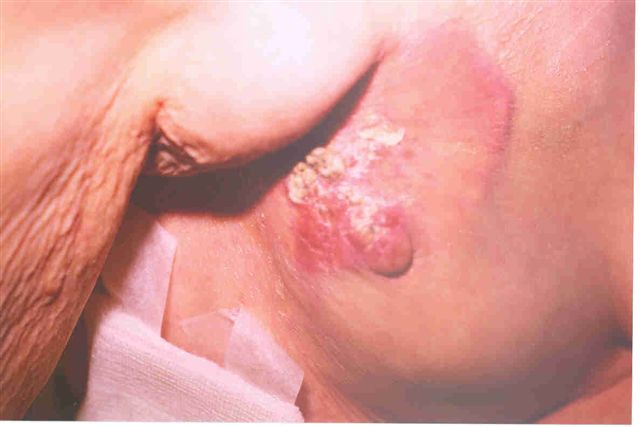
Photograph shows a patient with advanced breast cancer.

Photograph shows a patient with advanced breast cancer.

Dear Dr. B: What’s new in breast cancer?

Answer: There are many good things happening in the field of breast cancer. To start with the prognosis is getting better. Nearly 98 per cent of women with early-stage breast cancer will survive at least five years. Most of these women will live a long healthy life.

But the bad news is the incidence of breast cancer is increasing. The numbers have been rising steadily since screening was established about 15 years ago. Because of the better screening methods more breast cancers are picked up at earlier stage with better cure rate. So, it is a mixture of bad news with good news. Without screening these cases would have eventually come to the surface (so to speak) probably with poor prognosis.

There is more good news. A recent trial showed Herceptin (trastuzumab), a drug used for late-stage breast cancer also helps women with early-stage breast cancer. The drug reduced recurrence of breast cancer by 50 per cent in early-stage breast cancer. It is useful in 20 to 30 per cent of these women whose tumours are HER2- positive.

Since 1999, Herceptin has been used in hospital setting for women with metastatic breast cancer. There was no funding for patients with non-metastatic breast cancer. It is an expensive drug. The annual cost of the drug per patient is $35,000-$45,000.

An article in the Canadian Medical Association Journal (Patient demand and politics push Herceptin forward) says some provinces have expanded funding for Herceptin to include non-metastatic breast cancer patients. The provinces are: British Columbia, Ontario, Saskatchewan and Quebec. Nova Scotia and PEI are extending availability on case-by-case basis. Women with breast cancer were happy to hear this. Alberta is in the process of finalizing the approval process.

All experts do not agree that such large amount of money should be spent on a small number of patients to gain few months of survival time. If the drug is curative then there would be no argument. But cure for cancer is no where in site. We just take baby steps and look for good news where ever we can find it. And there is no harm in experts debating issues. After all we live in a democracy. Let the best argument prevail.

The debate about the diagnostic accuracy of mammograms for screening purposes has been going on for many years. There is no dispute about the appropriateness of breast cancer screening in women aged 50-69 years. But the sensitivity of mammography in detecting breast cancer depends on the patient’s age, the size and location of the lesion, the hormone status of the tumour, and density of a woman’s breast, the overall image quality and the interpretative skills of the radiologist. So, mammography is good but not perfect.

What about obesity? Yes, weight gain increases breast cancer risk possibly due to excess estrogen derived from fatty tissue. Obese women are twice as likely to die from breast cancer. Women can reduce the risk of breast cancer by taking care of their weight. Studies have shown that there is an association between physical activity and breast cancer prevention. Physical activity also reduces the risk of cardiovascular disease and diabetes.

Those women who do not exercise regularly should take up the challenge. Most women do a great job looking after their families, but in the process they forget about themselves. An ounce of selfishness may be good for the rest of the family! As long as my dinner is ready when I come home!

Start reading the preview of my book A Doctor's Journey for free on Amazon. Available on Kindle for $2.99!