Miscellaneous Medical News

In September, 2002 a mosquito bit a Toronto resident, George Eliopoulos. He subsequently died due to West Nile virus. Eliopoulos was in his 60s. His family is now suing the Ontario government alleging it failed to properly implement its 2001 West Nile virus surveillance and prevention plan.

The case is slowly going through the judicial system. Bill Rogers, legal columnist for the Medical Post says the Ontario government has lost two written judicial pronouncements. But the case is far from over. The court has still to decide whether this case can go to court.

There are 40 other individuals who contracted West Nile virus in 2002 are also suing the Ontario government.

The law suits claim that the government of Ontario’s May 2001 plan for surveillance and prevention of West Nile virus was deficient and the government failed to implement it in a reasonable and careful manner.

One of the issues the court has to decide is whether Ontario government’s West Nile virus plan was a government policy. If so, then governments cannot be sued for their policy, says Rogers. The court will also decide if government negligence caused deaths due to West Nile virus.

*********************************************

A report in the Canadian Medical Association Journal (CMAJ) says doctor shortage is increasing in Canada. The proportion of family physicians accepting new patients declined from 23.7 per cent in 2001 to 20.2 per cent in 2004. This shortage is going to get worse as 3800 physicians plan to retire this year.

Currently, 24 per cent of Canada’s doctors are international medical graduates. In Saskatchewan, more than 50 per cent of doctors are international medical graduates.

Part of the problem, says CMAJ report, is that there are only 6.5 medical school positions per 100,000 population in Canada compared to 12.2 openings in the U.K. The second problem is lack of sufficient residency programs. If medical school positions are increased then the residency programs will have to be expanded. When is this going to happen?

In the meantime, Canadians are living longer and their health care needs are increasing. The big question is: Are we ever going to have enough doctors, nurses and other health care professionals to provide appropriate care to those who need it?

***********************************************

Is your doctor following his own advice?

Yes, says a report in the Medical Post. At least, the majority of them are taking actions to stay healthy.

A Harvard Medical School study says most doctors make an effort to eat wisely and many make a point of working out regularly. Here are some of the findings of a survey of 15,000 physicians:

-82 per cent eat breakfast regularly and consume at least three servings of fruit or vegetables

-only 12 per cent admitted to eating fast food

-nearly 60 per cent chose olive oil over less healthy fats

-about 50 per cent drink alcohol in moderation (fewer than five drinks a week)

– 78 per cent take vitamin supplements regularly

-doctors older than 50, 75 per cent said they had under gone colonoscopy and 84 per cent had PSA test done

-two-thirds of the women older than 40 have had annual mammogram

-majority of the physicians exercised minimum of three times a week

Looks like the majority of the doctors practise what they preach.

Start reading the preview of my book A Doctor's Journey for free on Amazon. Available on Kindle for $2.99!
Celiac Disease

Nancy Kershaw
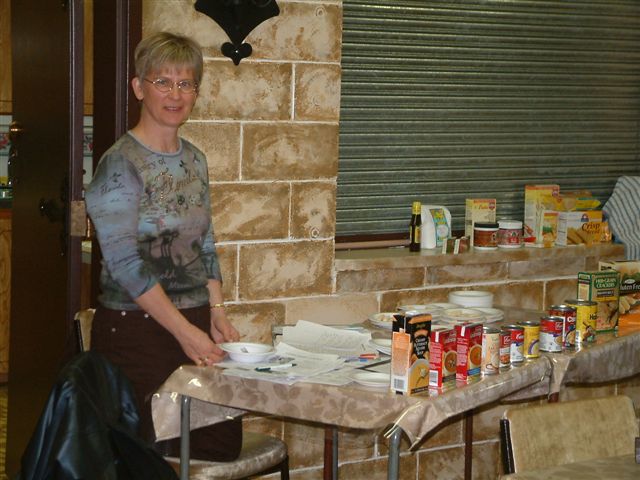
Photograph shows Nancy Kershaw making a presentation at the celiac disease support group that meets regularly at the Church of the Nazarene in Medicine Hat.

Dear Dr. B: October is Celiac Awareness Month. Recently diagnosed, I find no one truly knows what it is. I didn’t know anything about it prior to diagnosis. I would like people to know how difficult it is to live with celiac disease food-wise.

Answer: Celiac disease (CD) is a lifelong autoimmune intestinal disorder and runs in families. First degree relatives of individuals with CD may or may not manifest symptoms of the disease. It affects people to varying degrees, from being critically ill to being completely well.

In Medicine Hat, there is a support group that meets regularly at the Church of the Nazarene. Currently the support group is run by Nancy Kershaw. Nancy was born with CD. She had diarrhea, bloating, anemia and malnutrition. She was diagnosed to have CD and put on gluten free diet. She did alright after that.

That was many years ago. Now Nancy is a mother of three grown-up children. But she continues to adhere to gluten free diet. Any departure from the rigid diet regime and the symptoms come back.

Gluten is the common name for the offending proteins in specific cereal grains that are harmful to persons with CD. When gluten is ingested, it causes immunologically toxic reaction in the lining of the small intestine. The small intestine is lined by villi which help absorb the nutrients from the food we eat. The toxic reaction damages these villi thus interfering with the absorption of nutrients and leading to diarrhea and malnutrition.

According to medical literature, the “Coeliac Affection” was first reported by Gee in 1888. It was not until 1950 that wheat was proposed to be the cause of CD. The evidence was based on the observation of a Dutch physician named Dicke who noted during World War II, a time when wheat grains were scarce in Holland that children with CD who had otherwise failed to thrive improved on a wheat-poor diet.

Diagnosis of CD is based on symptoms and tests. There are several immunological blood tests available to make a diagnosis of CD. But the only confirmatory test is a small bowel biopsy done during gastroscopy.

A person should not be prescribed gluten free diet until the biopsy has confirmed the diagnosis. Abnormality in small bowel disappears once the person strictly follows gluten free diet.

Nancy says CD support group was started in Medicine Hat about three years ago. About 12 to 20 people attend the meeting. Nancy feels that there are more people in Medicine Hat with CD but are not aware of the support group. At the group meetings the attendees share food and recipes and talk about their experience with CD.

Nancy says some businesses and restaurants in Medicine Hat have been very supportive. For example, Nutter’s has been very generous with their food supplies for the support group. They are more than willing to stock gluten-free food in their stores.

Nancy says Moxie’s Restaurant has gluten-free food menu. In fact, any restaurant would be able to help a person with special diet requirement if a person phones the restaurant in advance.

Once CD is diagnosed, it is prudent to stay on a life-long gluten-free diet. It is not easy. But you can ask for help. The support group meets second Wednesday of each month at 7:00 p.m. at the Church of the Nazarene. Please contact Nancy at 526-0772 or Christine at 526-9524 for more information.

Start reading the preview of my book A Doctor's Journey for free on Amazon. Available on Kindle for $2.99!
Prostate Cancer Tests


Dear Dr. B: Can you please tell me about the new test under development for early detection of prostate cancer?

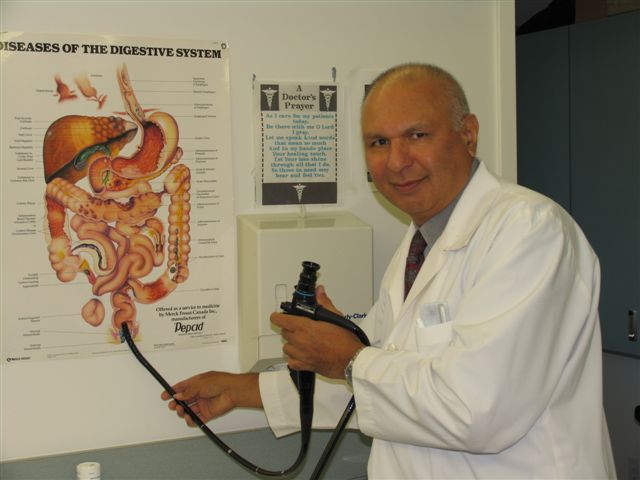
Answer: I received this question from a friend whose style of writing and sense of humour I enjoy. The e-mail contained a comment on my last column on aspirin and colon cancer and the photograph accompanying the article showing a flexible sigmoidoscope. Here in part is what my friend said:

‘Imaginative photo. We amateurs still squirm about such “personal” things and, I’m sure, men more than women, are real wimps about poking around the body. Of course, to a medical person it is a smart surgical instrument used in an everyday procedure. To a patient it is perceived as a fire hose up the whazoo… Just the other day I was discussing, in a casual conversation, the old finger-vs.-PSA test… Today, through bleary eyes, I read a piece in the Globe about new research and new tests under development. I know you’ve hit this before. But it might be worth a visit to this subject again some time.’

My friend is right. It is time to revisit the subject because prostate cancer is the most frequent cancer and the second leading cause of death from cancer in men, exceeded only by lung cancer. In our region, 80 to 90 new cases of prostate cancers are diagnosed each year. And each year 10 to 15 patients die of the disease.

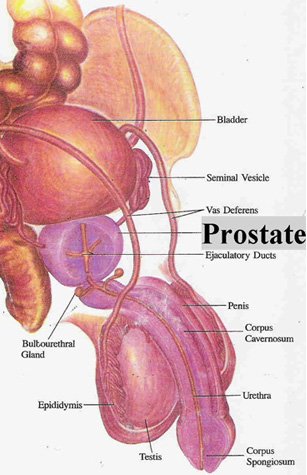
The walnut size prostate gland lies below the urinary bladder in front of the lowest inch of the rectum, through which it can readily be felt on digital rectal examination. The gland has an important role in the proper flow of urine. It also provides the proteins and ions that form the bulk of the semen. In conjunction with other smaller glands in the vicinity, the prostate gland produces secretions that serve to lubricate the reproductive system and provide a vehicle for storage and passage of sperms.

Once upon a time, “the old finger” i.e. digital rectal examination (DRE) was the only crude way to pick up early prostate cancer. Although DRE has a cancer detection rate of only 0.8 to 7.2 percent, it remains an important test that can be done easily in a doctor’s office. It also checks for anal and rectal tumours.

Then came the PSA blood test. PSA was expected to replace the embarrassing and uncomfortable DRE. And it was promoted as an ideal test for screening and early detection of prostate cancer. But this hope has not materialized.

Now a group of researchers from the University of Michigan Medical School are working on a test which would use the body’s own immune system to detect prostate cancer early. That makes sense as the immune system, in response to cancer, releases thousands of chemicals into the bloodstream to destroy the tumor.

The new blood test looks for 22 of these chemicals that specifically fight prostate cancer. The preliminary report indicates that these chemicals are more reliable than PSA in detecting prostate cancer. But the bad news is that it will be several years before this test is perfected and marketed for everyday use.

In the meantime, we have to rely on “the old finger” and PSA test. Findings from a new national research study released recently by the Prostate Cancer Research Foundation of Canada (PCRF) found very few Canadian men are willing to discuss prostate cancer and PSA test with their family doctors. PCRF has launched a campaign with a slogan “Don’t Get Scared. Get Tested.” More information can be found on PCRF website, www.prostatecancer.ca.

Start reading the preview of my book A Doctor's Journey for free on Amazon. Available on Kindle for $2.99!

Asprin and Colon Cancer

Dear Dr. B: Does aspirin prevent colon and rectal cancer?

Answer: In the past there have been numerous reports supporting the protective effect of aspirin and other non-steroidal anti-inflammatory drugs (NSAIDs) on the development of cancer.

But a recent study from the Harvard Medical School, published in the Journal of the American Medical Association (JAMA), concluded that low doses of aspirin (100 mg) taken over a long period of time (10 years) do not help prevent colon cancer. In fact, the researchers found that low-dose use of aspirin had no effect on total cancer, breast cancer, colorectal cancer or cancers at any other sites, with the exception of lung cancer. Again, the findings on lung cancer were not conclusive.

In another study, the researchers found high doses of aspirin (14 tablets of 325 mg. aspirin in a week) taken over 10 years can prevent colorectal cancer by 53 per cent. This study involved 80,000 women. If you take six to 14 aspirins a week you reduce your risk by 22 per cent.

This information is important for individuals who are at a high risk for development of colon cancer because of personal or family history. But there is a risk involved when aspirin is consumed. For every one or two women who were protected from cancer, eight developed serious bleed from the stomach and intestine.

Aspirin is not the magic pill for prevention of colorectal cancer. But there are other things one can do to prevent colorectal cancer. Limit consumption of red meat and processed meat. Maintain normal body weight. Have a regular rectal examination after the age of 40. Have your stool checked for occult blood. Report any alarm symptoms to your doctor because you may be a candidate for further investigations involving barium enema and flexible sigmoidoscopy or colonoscopy.

These investigations are also used for screening. All screening tests have advantages and disadvantages and none of the screening tests have 100 per cent accuracy rate. Screening for colorectal cancer is important and should be encouraged among healthy asymptomatic Canadians who are 50 years of age or over. But the ideal method of screening remains controversial.

There is no controversy when it comes to patients who have alarm symptoms. The alarm symptoms are: rectal bleeding, change in bowel habit, anemia, change in the caliber of your stool, loss of weight and abdominal mass. These complaints should be investigated early as colorectal cancer is the second most common cancer among Canadians and affects men and women equally.

Something to think about!

Peter Mansbridge, Chief Correspondent of CBC Television News and Anchor of The National writes in his Macleans column, “The war on terror now enters its fifth year, making it as long as the First World War, almost as long as the Second, and longer than the Korean war.” He goes on to say that as in all wars, most of the dead are young, some very young.

“Each week there seems to be at least one 18-year-old listed. That means that on September 11, 2001, those youngsters were barely in their teens – just 13 or 14. Barely into high school… Now they are dead soldiers.”

Start reading the preview of my book A Doctor's Journey for free on Amazon. Available on Kindle for $2.99!