
Six things to know about coronavirus disease (COVID-19)

Red Rock Coulee (Dr. Noorali Bharwani)

Coronavirus disease is in the news. It is causing anxiety in the general population.

We know quite a bit about the virus and how it affects us. But there is a lot we do not know. I have gathered some information and summarized it here. Health Canada has lots of information on this subject on their website.

1. What is coronavirus disease?

Coronaviruses are a large family of viruses. They can cause diseases ranging from the common cold to more severe diseases such as Severe Acute Respiratory Syndrome (SARS) and Middle East Respiratory Syndrome (MERS-CoV).

COVID-19 is a new disease that has not been previously identified in humans, says Health Canada website.

When there was an outbreak of pneumonia in Wuhan, China determined that a novel coronavirus (referred to as COVID-19) is responsible for the outbreak.

Health Canada says, “Authorities in China and worldwide are conducting further investigations to better understand where the disease came from, how it is spread and the clinical severity of illness in humans.”

WHO recently announced official names for the virus and the illness. The illness has been named as COVID-19 (previously known as “2019 novel coronavirus”). As you can see COVID is an abbreviation of coronavirus disease. The virus which causes this illness is called severe acute respiratory syndrome coronavirus-2 (SARS-CoV-2).

2. Why is it spreading so fast?

The coronavirus is a respiratory virus. It is spread in a similar way to the common cold or to influenza. It has spread from China to at least 40 other countries around the world, affecting stock markets and disrupting travel. Not one person of 117 who have been tested for COVID-19 in Alberta are sick with this virus.

This new virus appears to be spreading from person to person. It may be spread by respiratory droplets when someone infected with the virus coughs or sneezes. But it’s unclear exactly how it spreads or how contagious it is, and research is ongoing.

Currently there is no vaccine to prevent the COVID-19 illness.

3. What are the symptoms of COVID-19?

Signs and symptoms can be mild to severe and include fever, cough and shortness of breath. Symptoms may appear two to 14 days after exposure.

You may not know you have symptoms of COVID-19 because they are similar to a cold or flu.

If you have fever, cough, difficulty breathing and pneumonia then you need to see a doctor. In severe cases, infection can lead to death.

4. What are the risks of getting COVID-19 for Canadians? How can you prevent it?

According to Health Canada the public health risk associated with COVID-19 in Wuhan, China, is low for Canada and for Canadian travellers.

Canada has no direct flights from Wuhan and the volume of travellers arriving indirectly from Wuhan is low. However, at this time, the Government of Canada recommends that Canadians avoid non-essential travel to China.

You try to prevent COVID-19 infection same as you try to prevent common cold and flu: wash your hands frequently; avoid touching your eyes, nose or mouth with unwashed hands; avoiding close contact with people who are sick; coughing or sneezing into your sleeve and not your hands; and staying home if you are sick to avoid spreading illness to others.

5. Is there a vaccine to protect against COVID-19?

No, but it is a work in progress. The flu vaccine does not protect against COVID-19.

6. What is the treatment for COVID-19?

For now, there is no specific treatments for most people with COVID-19. Most people with common coronavirus illness will recover on their own. If you have any symptoms described earlier then contact your doctor.

I hope this information helps. Stay healthy.

Start reading the preview of my book A Doctor's Journey for free on Amazon. Available on Kindle for $2.99!

Loneliness in older adults poses mental health risks

Barcelona. (Dr. Noorali Bharwani)

Let us define loneliness. Loneliness is the state of mind. You can be in a company or relationship and you may feel lonely. You may be alone and feel sorry for yourself. It’s a feeling of sadness or even anxiety that occurs when you want company.

Feeling of loneliness can occur in a crowded place where you are not interacting with others.

Loneliness has a wide range of negative effects on both physical and mental health, including stress, depression and cognitive decline. It can affect your heart. It can lead to stroke.

Come to think of it, we are social animals. Our connection to others enables us to survive and thrive. Especially, seniors are vulnerable to social isolation and loneliness. This leads to physical and mental illness.

Although loneliness is not a classified disease or mental health disorder, it certainly is a mental health issue. According to an article in the Canadian Medical Association Journal (Loneliness in Older Adults, CMAJ April 29, 2019) loneliness affects three major dimensions:

  1. Affect: Feelings of desperation, boredom and self-deprecation.
  2. Cognition: Negative attitudes toward self and others, and a sense of hopelessness and futility.
  3. Behavior: Self-absorbed, socially ineffective and passive.

Loneliness is linked to decline in health. More than 40 per cent of older adults, particularly women, experience loneliness. CMAJ article says there is compelling evidence that loneliness may accelerate physiologic aging. It is associated with elevated blood pressure and atherosclerosis, and increased risk of coronary heart disease, stroke and cardiovascular mortality.

Loneliness is also associated with functional impairment, depression and dementia. It is also a risk factor for death. Several studies have shown loneliness increases all-cause mortality by 26 to 45 per cent. The effect of loneliness is comparable to other known risk factors for death, including obesity and smoking, says CMAJ article.

Lonely individuals use health care service more often than others. It seems lonely individuals seek social contact through health care visits. More than 75 per cent of general practitioners in the United Kingdom reported seeing between one and five patients a day who visited because of loneliness, says the CMAJ article.

There is no medical treatment for loneliness. As loneliness cannot be effectively treated with medications or acute care, health care practitioners may consider social prescribing to connect lonely older adults with sources of support in the community.

Do you want to start a social prescribing network in your area? I believe they have started this in Ontario. The Social Prescribing Network website is a useful resource. Here is some information from their website:

“The Social Prescribing Network consists of health professionals, researchers, academics, social prescribing practitioners, representatives from the community and voluntary sector, commissioners and funders, patients and citizens. We are working together to share knowledge and best practice, to support social prescribing at a local and national levels and to inform good quality research and evaluation. Over the past year we have been setting up regional networks around England, Ireland and Scotland.”

What do you understand by cognitive decline and impairment?

Cognitive decline comes with aging. Cognitive decline means your brain does not work as well as it used to. This isn’t the same as cognitive impairment, which can be the result of damage, disease or an increased level of cognitive decline from another source.

Cognitive impairment is when a person is confused, cannot remember who he or she is, judgement is impaired, has loss of short-term or long-term memory, has trouble learning new things, concentrating, or making decisions that affect everyday life. Cognitive impairment ranges from mild to severe.

The bottom line is, people who engage in meaningful, productive activities with others tend to live longer, boost their mood, and have a sense of purpose. Having a sense of purpose is important.

Start reading the preview of my book A Doctor's Journey for free on Amazon. Available on Kindle for $2.99!

Five things you should know about prevention and early detection of colon and rectal cancer.

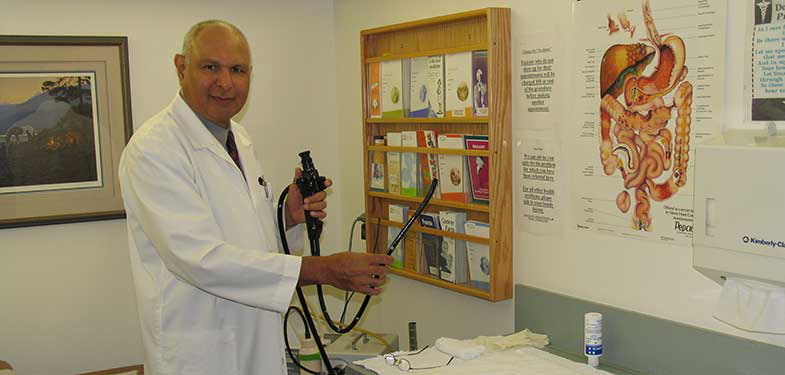
Flexible sigmoidoscopy demonstration by Dr. Noorali Bharwani.

Generally speaking, nearly half of Canadians will get some kind of cancer during their lifetime, according to Canadian Cancer Statistics 2017. Cancer is the leading cause of death in Canada, responsible for one in four deaths.

Today, we will talk about colon and rectal cancer – also known as colorectal cancer.

1. How common is colorectal cancer in Canada?

Colorectal cancer is one of the most common cancers worldwide and the second-most common cancer in Canada. Both men and women are equally at risk. The cancer is most common among people aged 50 and older but can occur in patients as young as teenagers. The average age at the time of diagnosis for men is 68 and for women is 72.

2. Who is at high risk for colorectal cancer?

Over 75 per cent of colorectal cancers happen to people with no known risk factors, which is why regular screening is so important. There are many risk factors. Most common ones are: previous history of colorectal cancer (CRC) and pre-malignant polyps, family history of CRC, genetic predisposition like Lynch syndrome (also called hereditary non-polyposis colorectal cancer, or HNPCC).

3. Signs and symptoms of colorectal cancer include:

A persistent change in your bowel habits, including diarrhea or constipation or a change in the consistency of your stool. Rectal bleeding or blood in your stool. Persistent abdominal discomfort, such as cramps, gas or pain. A feeling that your bowel doesn’t empty completely.

4. Who should be screened for colorectal cancer and how often?

Screening program is meant for individuals who have no bowel symptoms or any risk factors. The idea is to pick up cancer in an early stage.

There are many screening programs for early detection of colorectal cancer. They vary slightly in details. Overall, the summary is as follows:

  • Asymptomatic people should be screened with a fecal immunochemical test (FIT) every 2 years.
  • Abnormal FIT results should be followed up with colonoscopy.
  • People ages 50 to 74 without a family history of colorectal cancer who choose to be screened with flexible sigmoidoscopy should be screened every 10 years.

There are two types of tests to check for blood in the stool – FOBT and FIT.

The FOBT can detect blood from any part of the gastrointestinal (GI) tract, while the FIT is more reliable in cases of bleeding from the lower part of the GI tract. The Canadian Task Force on Preventive Health Care published guidelines in 2016 that state people who do not show symptoms and don’t have a strong family history of colorectal cancer start getting screened at age 50.

Not all patients with positive FOBT will have colorectal cancer. No test is one hundred per cent accurate. Overall, about 12 per cent of patients with a positive FOBT have colorectal cancer. If you do an FOBT every two years, you can reduce your risk of dying from bowel cancer by up to a third.

5. Who needs a screening colonoscopy?

Colonoscopy is considered the gold standard for colon investigation. Indeed, if anything is found on fecal occult blood or by sigmoidoscopy, patients are referred for colonoscopy. It is the test advised for higher risk patients with a family history of colorectal cancer.

New guidelines from the Canadian Association of Gastroenterology urge people with a history of colorectal cancer in their immediate family to start screening earlier and get more frequent checks for the disease. People whose parents, children or siblings have been diagnosed with colorectal cancer are encouraged to get screened between ages 40 and 50, or 10 years earlier than the age at which their relative was diagnosed, whichever comes first.

The whole premise for doing these tests is to pick up pre-malignant polyps and cancer in early stages. Cancer picked up early has 92 per cent five-year survival. If it is in the late stage then the five-year survival is around 10 per cent. Talk to your doctor and get your test done.

Start reading the preview of my book A Doctor's Journey for free on Amazon. Available on Kindle for $2.99!

Acute Coronary Syndrome

Lake Louise. (Dr. Noorali Bharwani)

Acute coronary syndrome is a medical emergency.

Acute coronary syndrome is a term used to describe a range of conditions associated with sudden, reduced blood flow to the heart. Part of the heart muscle is unable to function properly or dies. It is critical to make an early diagnosis.

The problem is, not all chest pain patients get investigated because the presentation of symptoms can be short term, intermittent or not very clear. Just like not all patients with headache get a CT scan of the head. Because not every person with a headache has a brain tumour. That is why many brain tumours are diagnosed late.

“Diagnosing a patient presenting with chest discomfort or pain remains a challenge for physicians despite advances in diagnostic testing, clinical practice guidelines, and enhanced understanding of acute coronary syndrome (ACS),” says the Canadian Medical Protective Association (CMPA) in their newsletter (December 2019).

CMPA suggests appropriate triage and testing, as guided by symptoms and patient risk factors. This may help improve the timely diagnosis of ACS. Basically, no chest pain should be ignored irrespective of age or sex of the patient.

What is acute coronary syndrome?

Acute Coronary Syndrome is a name given to three types of coronary artery diseases that are associated with sudden rupture of plaque inside the coronary artery. One such condition is a heart attack (myocardial infarction) — when cell death results in damaged or destroyed heart tissue. Angina and heart attacks are types of acute coronary syndrome.

Acute coronary syndrome often causes severe chest pain or discomfort. It is a medical emergency that requires prompt diagnosis and care. The goals of treatment include improving blood flow to the heart, treating complications and preventing future problems.

Chest pain or discomfort is the most common symptom. However, in some patients’ signs and symptoms may vary significantly depending on patient’s age, sex and other medical conditions.

If you are a woman, older adult or have diabetes then you are more likely to have signs and symptoms without chest pain or discomfort. That is one of the reasons why a correct diagnosis is missed.

CMPA says, “Consistent with the medical literature, risk factors for women also displayed gender-specific characteristics, such as menopause and pregnancy, and women frequently presented with atypical chest pain.”

The signs and symptoms of ACS usually begin abruptly. They include: Chest pain (angina) or discomfort, often described as aching, pressure, tightness or burning. Pain spreading from the chest to the shoulders, arms, upper abdomen, back, neck or jaw.

Early diagnosis is important. When someone is rushed to the emergency room with chest pain, testing must be performed to determine whether or not a person’s signs and symptoms are due to a heart attack or to another cause. The doctor will order a blood test to see if there is evidence that heart cells are dying and order ECG to check for the heart’s electrical activity.

Initially, if the tests are normal then serial testing (ECG and cardiac enzymes) should be done to check for any changes. Mistakes occur if there is failure to consider cardiac risk factors in the diagnosis of unexplained chest discomfort or pain. Especially in female patients.

In conclusion, managing acute coronary syndrome is a relatively common and challenging task, says CMPA. Patient’s risk factors should be considered along with appropriate serial blood testing in the emergency department. This can contribute to safer patient care, says CMPA.

Start reading the preview of my book A Doctor's Journey for free on Amazon. Available on Kindle for $2.99!