What do different masks actually do?

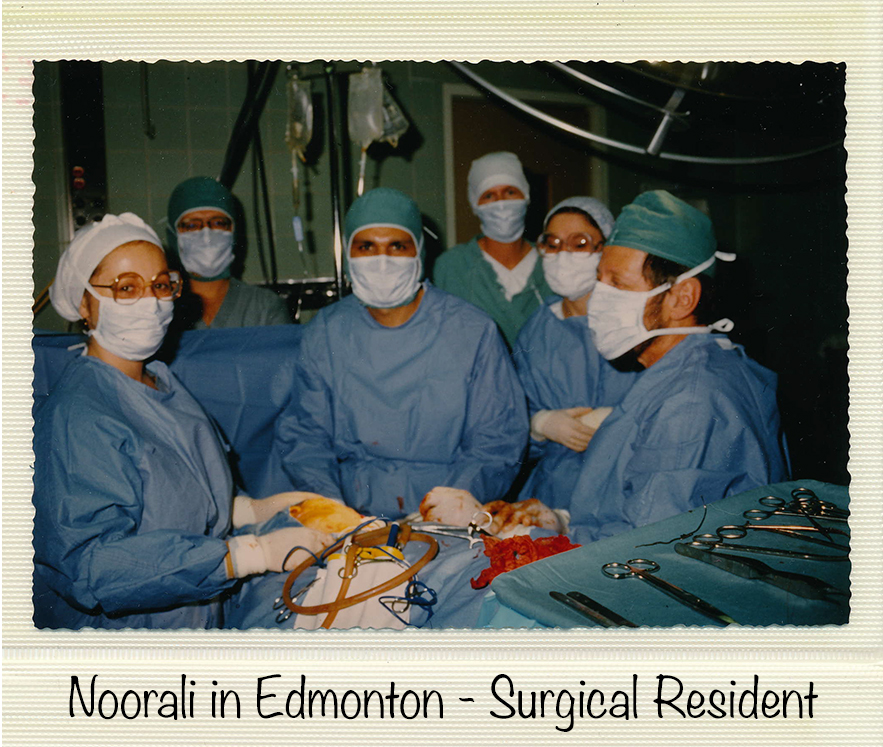
An example of a surgical mask while Dr. Bharwani was a surgical resident in Edmonton in 1983.

“The wearing of face masks during the 2019 – 20 coronavirus pandemic has received varying recommendations from different public health agencies and governments,” says an article in Wikipedia.

An editorial in the British Medical Journal (COVID -19: should the public wear face masks? – BMJ 09 April 2020) says, “Yes – population benefits are plausible and harms unlikely.”

Is there any direct evidence that wearing a mask would help? The editorial concludes, “…given the gravity of the pandemic, indirect evidence of benefit combined with the low risk of harm should outweigh the absence of direct evidence supporting mask wearing by the general public.”

It has been about five months since COVID-19 hit the headlines and spread infection all over the world. Since then one of the big topics of discussion has been “to wear or not to wear” a face mask. There has been so much disagreement and debate among health agencies and governments, it has left the public confused.

Some groups recommend that all members of the public wear masks, while others recommend that only COVID-19 patients and their caretakers should wear them.

In some countries it is mandatory to wear a face mask. On the other hand, other countries are still struggling to provide appropriate advice to the general public. To top it all there is an acute shortage of masks.

Types of face masks, from least to most protective, include:

  1. Cloth face masks: Although good quality evidence is lacking, some data suggest that cloth masks may be only marginally (15 per cent) less effective than surgical masks in blocking emission of particles, and fivefold more effective than not wearing masks. Therefore, cloth masks are likely to be better than wearing no mask at all (BMJ).

  2. Surgical masks: The standard surgical mask, also known as a fluid-resistant surgical mask (FRSM) is designed to provide a barrier to splashes and droplets for wearer of the mask. It fits fairly loosely to the user’s face. They are used for a variety of procedures in community as well as hospital settings. These are single-use masks. They should not be undone and dangled round the neck between procedures. It should be worn with eye protection.

    Surgical masks do not provide complete protection from germs and other contaminants because of the loose fit between the surface of the face mask and the face. Surgical masks may be labeled as surgical, isolation, dental, or medical procedure masks.

    Surgical masks are recommended for those who may be infected, as wearing a mask can limit the volume and travel distance of droplets dispersed when talking, sneezing, and coughing.

  3. N95 masks: Also known as respiratory mask. It is a disposable mask. Masks ending in a 95, have a 95 per cent efficiency. An N95 mask is a particulate-filtering facepiece respirator. It filters at least 95 per cent of airborne particles. It is the most common respirator used in health care.

  4. Face shields and medical goggles are other types of protective equipment often used together with face masks.

In summary, personal protective equipment, including devices such as N95 respirators, gowns, masks, gloves and face shields, are medical devices in Canada and are subject to requirements under the Medical Devices Regulations. They should be used appropriately. Hope the information provided here helps. Be safe. Stay healthy.

Start reading the preview of my book A Doctor's Journey for free on Amazon. Available on Kindle for $2.99!


Irritable Bowel Syndrome and The Invisible Enemy

Valley of the Kings Egypt (Dr. Noorali Bharwani)

COVID-19 has caused significant stress and anxiety among the general population. Individuals with a history of irritable bowel syndrome (IBS) will have aggravation of symptoms.

IBS is a common medical condition that affects the large intestine. It is a chronic condition that requires long term management. Unfortunately, the pathology and physiology of IBS is not fully understood.

Usually, only a small number of people with IBS have severe symptoms. Some people can manage to control their symptoms by managing diet, make lifestyle changes and controlling stress.

More severe symptoms can be treated with medication and counseling. But management of IBS is not always easy. IBS is a relapsing and remitting disorder in which the predominant bowel habit and symptoms can change over time. It is like COVID-19 except IBS is usually not life threatening.

We don’t know what causes IBS. But we know stress aggravates the symptoms.

Good news is IBS does not cause changes in bowel tissue or increase your risk of colorectal cancer.

The most recent review on this subject was published in the Canadian Medical Association Journal (CMAJ March 16, 2020 – An approach to the care of patients with irritable bowel syndrome).

IBS is a disorder of gut – brain interaction leading to abdominal pain with a change in frequency or form of bowel habit. Forty per cent of patients referred to a gastroenterologist have IBS.

IBS affects four per cent of men and eight per cent of women in Canada, with a peak incidence in ages 18 – 34 years. It can occur in patients with other medically unexplained conditions, such as fibromyalgia and depression or anxiety. Symptoms typically vary in frequency and intensity, and are often aggravated by stress. It is very disruptive to an individual’s work schedule and life style.

When a person has symptoms suggestive of IBS, the burden falls on the physician to make sure other conditions like inflammatory bowel disease (IBD), celiac disease, bile acid diarrhea and carbohydrate malabsorption (e.g. lactose intolerance) are not missed.

Patients who need further investigations are those whose first presentation of symptoms are at age 50 or after, has weight loss, has rectal mass or bleeding, and has family history of colon and rectal cancer.

Diagnosis relies on the identification of chronic typical symptoms characterized by abdominal pain, bloating and change in frequency or form of bowel habit.

The clinical management of IBS can be challenging. The CMAJ article says physician should establish positive therapeutic relationship with patients, underpinned by patient education. That is key to optimizing clinical outcomes. You cannot cure the problem but managing the bothersome symptoms is the mainstay of IBS treatment.

While several management options exist, none of them are effective to cure the problem. They can provide some symptomatic relief. For more information visit: The IBS Network.

In conclusion, IBS is a common disorder characterized by chronic abdominal pain that is associated with a change in frequency or form of bowel habit. The underlying cause is incompletely understood. Therefor treatments are based on symptom management. That include education and reassurance, dietary modifications and pharmaceutical interventions, largely directed toward improving the most bothersome symptoms.

This brings us to the current situation of dealing with the invisible enemy (COVID-19) and the stress it is causing. This is having negative physical and mental effect on our body. Best thing is to do what the experts say and hope for the best.

Manage your stress by doing meditation, yoga, and establish network with friends and family. There are many options available online. Be creative. Be safe and take care.

Start reading the preview of my book A Doctor's Journey for free on Amazon. Available on Kindle for $2.99!

Wellness During the COVID-19 Pandemic

Fairmont Banff Springs in Alberta, Canada. (Dr. Noorali Bharwani)

“Yesterday is history, tomorrow is a mystery, today is a gift of God, which is why we call it the present.” -Bil Keane (American cartoonist)

As you know pandemic coronavirus disease (COVID-19) is an infectious disease caused by a new virus. COVID-19 has changed our lives and put our dreams on hold.

People are in quarantine and isolation.

What does quarantine mean? Quarantine sequesters healthy, asymptomatic people exposed to an infectious disease for the duration of the incubation period, to contain the spread of the disease (Canadian Medical Association Journal – CMAJ March 20, 2020). Example: Canadian Prime Minister Justin Trudeau, who was exposed and is asymptomatic, is under voluntary quarantine.

In contrast, isolation refers to separating patients with active infection from healthy, unexposed people, to prevent transmission. Example: Prime Minister’s wife, Sophie Grégoire Trudeau.

Quarantines are enforceable under the Canadian Quarantine Act. This law dates to the 1870s and was updated in 2005 after the SARS outbreak. It allows the federal health minister to enact measures ranging from screenings to mandatory quarantines at Canadian borders.

Quarantines may be necessary but can create hardship for individuals. Quarantine may cause adverse psychological effects. Some people quarantined in Toronto during the SARS outbreak had symptoms of posttraumatic stress disorder and depression, says the CMAJ article.

Quarantine brings financial hardship and stigmatization. To promote compliance, quarantined people need ongoing access to resource materials, open lines of communication and psychosocial support. Is that possible?

In the current environment, I doubt if there is anybody who is not worried or stressed. This can affect your general health.

Stress can make your heart pound, your belly ache, and your palms sweat. Stress increases the level of hormone cortisol. This can lead to increased hunger and binge eating. This can lead to obesity.

Other possibility is depression sets in and you may lose your desire to eat and start losing weight.

There are many ways to stay connected with your friends and family. Thanks to our technological advances we have cell phones, laptops, computers which keep us connected. We can send man to moon but unfortunately cannot prevent common cold or get immediate control of COVID-19. I guess, that is life. We will win this battle as well. Be optimistic.

There are many ways to keep yourself busy during this time of stress. Probably you have already figured it out. Children are not at school. Most of the adults are not at work. How do you stay busy?

I divide the day into three segment of three hours each. Three hours in the morning, three hours in the afternoon and three hours in the evening. About couple of hours are allotted in between each segment for nutrition and family time and some TV.

How do you utilise three-hour segments?

That all depends on your interest. If you are doing your office and business work from home then you have to allow enough time for that. You have to allow time to spend with your family and keep them active and entertained. You have to have time for yourself with yoga (if that is your interest), exercise, and meditation. There are many other options. Too many to mention here. Important thing is to prevent boredom.

Make a list of all the things you always wanted to do but were too busy to do before our lives changed. Stock up on healthy snacks. And let us hope for the best.

We all need good luck. So here it is from me to you! Stay safe.

Start reading the preview of my book A Doctor's Journey for free on Amazon. Available on Kindle for $2.99!

Can we prevent sudden death in young athletes?

Owl at Agape Hospice in Calgary, Alberta. (Dr. Noorali Bharwani)

Some young athletes die suddenly.

If the athlete is over 35-years of age, sudden death is usually caused by coronary artery disease. If the athlete is below 35-years of age, sudden death is most commonly related to congenital or genetic heart conditions.

Exertional heatstroke can cause sudden death. Exertional heatstroke is caused by an increase in core body temperature brought on by intense physical activity in hot weather. It is most likely to occur if you’re not used to high temperatures.

It is estimated about one in 40,000 to one in 80,000 young athletes suddenly die each year. More than half of sudden deaths are due to underlying heart disease. The most common cause is a genetic condition called hypertrophic cardiomyopathy (HCM). This genetic abnormality causes an area of the heart to become two to three times thicker than usual, making it difficult for blood to pump past the thick point. Complications include heart failure, an irregular heartbeat, and sudden cardiac death.

Unfortunately, up to 50 per cent of those who die never knew they had heart disease.

Review of literature indicates countries such as Italy, teenage athletes are routinely screened with an electrocardiogram (EKG) to detect underlying abnormalities. In the United States, EKG screening is not routinely recommended. It is tempting to order routine EKG to screen young athletes, but there is no strong evidence that indicates screening EKGs can reduce sudden cardiac death among young athletes.

The American Heart Association recommends competitive athletes undergo a 12-item standardized history and physical questionnaire that the organization has developed. EKGs can identify pre-existing heart disease in teens who have a family history of early cardiac death. Genetic testing is used for select individuals with HCM and those who have a family history of heart disease.

A review article in the Canadian Medical Association Journal (CMAJ July 15, 2019) titled,  “The prevention and management of sudden cardiac arrest in athletes,” says exercise may increase the rate of sudden cardiac arrest in athletes with pre-existing cardiac conditions; however, this is difficult to predict or prevent, which means that screening athletes for underlying cardiac pathology is complex, challenging and of uncertain benefit.

A recent Canadian position statement recommends a tiered approach to pre-participation screening, advises against the routine use of EKG as a screening tool, and emphasizes the importance of shared decision-making when considering whether to continue or withdraw from competitive sport.

Establishing effective resuscitation protocols and increasing the availability of automated external defibrillators in settings where competitive sport is undertaken are the most effective strategies in helping reduce the incidence of sudden cardiac death among athletes, says the CMAJ article.

Among young athletes, sudden cardiac arrest is usually the first manifestation of underlying cardiac problem, although one retrospective study found 30 per cent of athletes had symptoms suggestive of cardiac disease before cardiac arrest.

The CMAJ article says, “In the absence of predisposing conditions or symptoms of heart disease, exercise, even at high intensity, poses very little risk to an athlete.”

It is important for young individuals to be involved in regular exercise and sport. The benefits are immense. There is reduced risk of death and disease, and substantial social and psychological gains.

There is no evidence that regular screening of young athletes is beneficial. And sudden cardiac arrest in young athletes is a rare event, the best approach, according to CMAJ article, shared decision-making between athlete and physician is the best approach when athletes who are found to have an underlying cardiac abnormality are considering whether to continue or withdraw from competition.

Start reading the preview of my book A Doctor's Journey for free on Amazon. Available on Kindle for $2.99!