Yoga and The Centre of Consciousness

Do you know what a Centre of Consciousness is? Have you ever thought of finding one? Once you find it, what do you do with it? What has yoga and meditation to do with the Centre of Consciousness?

Answers to these and many other questions can be found in a book titled Sutras of the Inner Teacher – The Yoga of the Centre of Consciousness. It is written by Drs. Martin and Marian Jerry, physician-scientist and clinical psychologist respectively.
Jerrys are now retired and live in Canmore.

During the Family Day long week-end, I decided to visit Canmore. I wanted to ski with my friends and to pay my respects to my mentor – the man who gave me a start in Canada.

That mentor happens to be Dr. Martin Jerry. I also had a selfish reason to visit him and his lovely wife. I wanted to discuss and get advice on a couple of projects I am working on.

I first met Martin Jerry when I came to visit my parents in Calgary in the summer of 1979. I had finished my surgical training in Britain and was looking for a research fellowship in Canada.

Jerry was then Professor of Medicine at the University of Calgary and Director of the Oncology Research Group of what later was to become Tom Baker Cancer Centre.

Jerry told me that he was looking for a research fellow in cancer immunology and the funding from the National Cancer Institute of Canada (NCIC) was already in place. After an interview and after completing other formalities he offered me the position that carried NCIC fellowship stipend of $1000.00 (one thousand dollars) per month.

I was single. I lived with my parents like a student, made some sacrifices and survived. I spent two years with Jerry’s group. I remember Jerry as an outstanding teacher, clinician, researcher and mentor who took good care of me and all those who worked under his stewardship. I also had the pleasure of knowing his wonderful wife Marian and their two sons, Paul and Mark.

In fact Paul Jerry is a chartered psychologist in Medicine Hat. What a coincidence.

Over the years I have been in touch with the Jerrys. I keep them informed on the progress I make in life. I feel the man who gave me a start in Canada should know how I am doing. I am also fascinated with their book. I would like to find my Centre of Consciousness, find spiritual enlightenment and take care of my fears and phobias. Is yoga and meditation the answer?

I believe so. Only time will tell whether I have the discipline to achieve that spiritual enlightenment. Jerrys’ book says, “No one can carry you to the mountain top. You can be guided, but eventually you must climb to the peak yourself to achieve complete mastery.”

The book is a good guide. And the visit to Canmore was very enriching. We talked about the past, the present and the future. I got the advice I needed to keep my projects on the right track and learnt again that there are kind and caring people in this world who do make a difference in a very private and quite way. For that I am thankful. I pray for their good health and happy retirement.

Start reading the preview of my book A Doctor's Journey for free on Amazon. Available on Kindle for $2.99!
Eggs, Eggs, and Eggs

Dear Dr. B: Does the nutritional value of an egg change if a person eats an egg raw, partially raw, hard boiled, scrambled, fried whole, or omelet? Some people believe it is nutritionally better to eat eggs raw. Is there any truth in that?

Answer: I have been eating eggs all my life. These days I prefer to eat egg white. Occasionally, I do eat a whole egg and sometimes I eat eggs fortified with omega-3 fatty acids. Mostly I make an omelet with egg white, tomatoes and onions or fry an egg with little bit of margarine.

My enquiries and research tells me that different methods of cooking eggs do not make a difference in nutrient content. But we should remember that composition of a prepared food is the combination of all the ingredients used and the method used to prepare the food.

For example, fried egg will have higher fat content due to presence of oil. A typical scrambled egg may have some dairy product which will contribute its own nutrients and calories to the preparation. Same principle applies when preparing an omelet.

A cooked egg also loses water so the nutrients are more concentrated. Protein in the cooked egg is more digestible than an uncooked egg because cooking slightly denatures the protein.

There are no known benefits of eating raw eggs. In fact eating raw eggs is considered unsafe because of the risk of salmonella infection. Though the odds are pretty low – in US it is estimated to be 0.045 per cent and only one egg in 20,000 eggs is estimated to contain salmonella. Salmonella does not grow well at cold temperatures; therefore, refrigeration is very important. Properly cooked eggs destroys salmonella

Recent news about the avian flu or “bird flu” has caused some concern. As we know avian influenza was first confirmed on an Abbotsford, BC area farm on February 19, 2004. By quarantining affected farms and humanely destroying flocks, the Canadian Food Inspection Agency (CFIA) was effectively able to control and put a stop to this outbreak.

CFIA states that there is no public health risk associated with consuming eggs as a result of these cases. The eggs available at Canadian supermarkets are safe to eat. No eggs from any infected flocks entered the food chain.

For safety reasons eggs should be cooked until the white and yolk are solid. We should be careful with recipes that require raw shell eggs or partly cooked eggs but do not require any heating to reach a temperature which will harden the egg white and the egg yolk.

Egg is considered to be a complete food. It is low in calories (79 calories) and is loaded with protein, important vitamins and minerals. Egg is low in fat but the yolk is high in cholesterol. Yolk is also high in calories (egg white 16 vs. yolk 63 calories per egg).

An egg a day is now considered safe for those people who have no cardiac or cholesterol problems. But egg white is healthier and safer to eat as it is low in calories with no fat or cholesterol. Egg white cartons can be easily purchased from Canadian supermarkets.

Thought for the week:

“All the things I really like to do are either immoral, illegal or fattening.”

– Alexander Woollcott 1887-1943

Start reading the preview of my book A Doctor's Journey for free on Amazon. Available on Kindle for $2.99!

Nasal Polyps

Dear Dr. B: What is a polyp? I have polyps in my nose and they bleed occasionally. Could they turn into cancer?

Answer: A polyp is a growth or tumor protruding from the lining of an organ such as the nose, bladder, uterus, and intestine or from any organ of the body.

Nasal polyps are growths in the mucous secreting lining of the nose or sinuses. They are grape like, fleshy and usually inflammatory in nature. Most of the nasal polyps are benign (non-cancerous), and can be on one or both sides of the nose. Unlike polyps in the colon or bladder, most polyps in the nose are not true tumors and do not suggest an increased risk of cancer. They are merely a reflection of inflammation.

Certain types of nasal polyps have a predisposition to turn into cancer. If you have polyps and if they tend to bleed then you should have your problem fully assessed by your doctor and a specialist in ear, nose and throat surgery (otolaryngologist).

Nasal polyps are more common in adults. . Men are four times as likely to have nasal polyps as women. The most common cause of polyps is allergy, followed by chronic sinus infection. They are more common in people who have asthma or inflammation of the lining of the nose (rhinitis), and cystic fibrosis.

People with nasal polyps suffer from stuffy nose and have trouble breathing. They become mouth breathers. They have a poor sense of smell and taste. Sometimes they have runny nose.

If you have chronic symptoms of rhinitis and sinusitis then your physician will refer you to an
otolaryngologist for an endoscopy. Endoscopy uses a small, flexible, lighted scope (nasopharyngoscope) to examine your nasal passages. A nasal polyp can be visualized and diagnosed with this instrument. Also biopsy can be taken to check for cancer.

You may also have a CT scan if the number and size of the polyps cannot be assessed with an endoscope. Quite often you may have polyps in the sinuses as well.

Nasal polyps are treated with corticosteroid nasal spray or corticosteroid pills. Steroids help to slowly shrink the polyps. If you continue to take the medicine, it may prevent new polyps. If your polyps are large, you may need surgery to remove them. Nasal polyps can recur. You should discuss with your doctor how to stay on maintenance therapy to prevent recurrence of nasal polyps.

A lesson in science:

In a school science class four worms were placed into four separate jars.

The first worm was put into a jar of alcohol. The second worm was put into a jar of cigarette smoke. The third worm was put into a jar of sperms. The fourth worm was put into a jar of soil.

After one day, the first worm in alcohol died. The second worm in cigarette smoke died. The third worm in sperms died. The fourth worm in soil stayed alive.

So the science teacher asked the class – “What can you learn from this experiment?”

Little Johnny quickly raised his hand and said “As long as you drink, smoke and have sex, you won’t have worms.”

Start reading the preview of my book A Doctor's Journey for free on Amazon. Available on Kindle for $2.99!

Laptops and Male Fertility

What is a laptop?

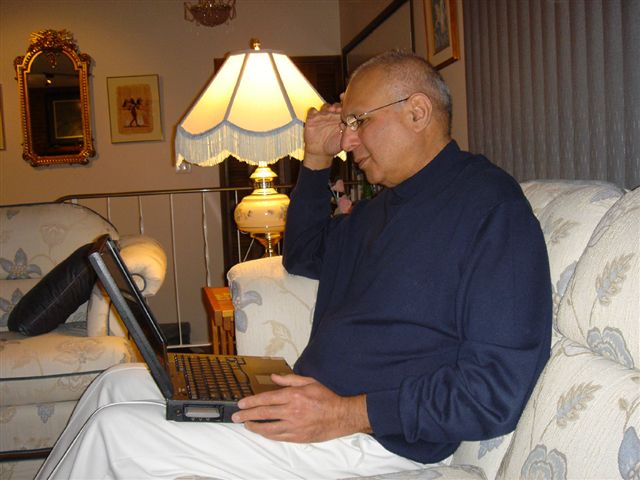
A laptop is a portable computer small enough to use on one’s lap. The question is – is it safe to use your lap as a desk?

The Medical Post reports that male fertility may be adversely affected by using a laptop balanced on the thighs.

A study published in a European journal (Human Reproduction) found the combination of the thighs held together to form a desk for the laptop plus the heat generated by the machine raised the scrotal temperature by 2.6 to 2.8 degrees Celsius within 15 minutes.

For fertility and production of sperms, it has been found that increase in the testicular temperature between one to 2.9 degrees Celsius may adversely affect the production of sperms.

The blood flow to the testes maintains the temperature of the testes two to four degrees Celsius lower than the rectal temperature in the normal individual. If there is loss of this temperature differential then the testicular function is compromised resulting in infertility.

Sperm and testosterone production occurs in the two testicles, or testes, which are contained in the scrotal sac (the scrotum). This sac develops on the outside of the body because normal body temperature is too high to allow sperm production.

Many hormonal and environmental factors influence the production of sperms. It takes approximately 64 days to produce one sperm. There are four stages involved in this process and there are millions of sperms present in different stages of production.

Any major physical or mental stress can temporarily reduce sperm count. Some examples are: emotional stress, sexual issues, testicular overheating from high fevers, saunas, and hot tubs, substance abuse, smoking, malnutrition and nutrient deficiencies, obesity, and vigorous bicycling.

Infertility affects one in 25 North American men. More than 90 per cent of male infertility cases are due to low sperm counts, poor sperm quality, or both.

Semen is produced by clusters of tissues called seminal vesicles and prostate gland. Semen provides a safe environment for 100 to 300 million sperms delivered at the time of ejaculation. But only 15 per cent of these are good enough to impregnate a woman. However, only 40 or more sperms survive the stress of ejaculation, the chemical composition of the semen and the hostile environment of the vagina (cervical mucous is sometimes impenetrable) to find an egg and fertilize.

It can take up to four days for the sperm to reach the egg in the fallopian tube. And the egg is available only for 12 hours each month for the sperm to get there on time and fertilize. And, in the end, only one sperm gets through to fertilize the egg. What a journey! No wonder so many couples have difficulty having children. On top of that we put laptops on our thighs!

Teenagers and young men (I presume that excludes me!) are advised to use laptops on a table or desk instead of on their laps. Have pity on these poor little tadpoles. They have to be strong – as their journey is long and perilous!

Thought for the week:
“Experience teaches only the teachable.” -Aldous Huxley (1894-1963)

Start reading the preview of my book A Doctor's Journey for free on Amazon. Available on Kindle for $2.99!