Deep Vein Thrombosis

Dear Dr. B: I broke my foot about eight months ago and while in a cast ended up with a blood clot in the opposite leg two weeks later. I was on warfarin (blood thinner) for six months. I am now wondering what the chances are of this happening again and is there any way of knowing for sure that the blood clot has dissolved. Would ultrasound help?

Answer: Blood clots in the leg veins are not an uncommon problem. A blood clot in a superficial vein is known as superficial thrombophlebitis. This condition is usually not serious or life threatening.

A blood clot in a deep vein of a leg is known as deep vein thrombosis (DVT). This is a serious condition as the clot may dislodge, travel through the blood stream and plug a vessel in the lung (pulmonary embolism). Pulmonary embolism (PE) can be fatal.

The calf muscles act as a second pump (first pump being your heart). The contraction of the calf muscles and the valves in the deep veins help push the blood from the lower extremity towards the heart.

DVT occurs when the blood moves through deep veins in the legs more slowly than normal or when there is some condition that makes blood more likely to clot. Two common examples are: when you are bedridden (after surgery, injury or chronic illness) or when you sit still for a long time (such as during a long plane flight or a long road trip). Under these conditions the blood moves more slowly and stagnation promotes clotting.

Obesity, cancer and smoking cigarettes also increase the risk of DVT.

Blood thinners (anticoagulants) like heparin and warfarin are used to treat DVT and prevent pulmonary embolism. The blood thinners do not dissolve the clot. They stop the clot from getting bigger, prevent the clot from breaking off and reduce the chances of having another blood clot.

The most common and sometimes very serious side effect of anticoagulant therapy is bleeding. Blood tests will check how well the medicine is working. If you bruise or bleed easily while on blood thinners then talk to your doctor and get a blood test done.

The risk of having recurrent DVT depends on the risk factors as outlined earlier. Generally speaking, if you have had DVT once then this does increase the risk of another DVT.

Clinically or radiologically there is no test to confirm if the clot is completely dissolved. The body takes its own time to dissolve the clot or the clot may get organized and form scar tissue, permanently blocking the vein or damaging the valves. Warfarin does not dissolve the clot. Normally, no tests are done to check if the clot is still present as the tests can be inconclusive or confusing.

Did you know?

According to Maclean’s magazine (April 25, 2005), a prominent Israeli rabbi now says it’s kosher to take Viagra during Passover so long as the little blue pill is placed in a special gelatin capsule before April 23, when the holiday begins. Putting the pill in a kosher capsule keeps its leavened coating from technically coming into contact with the body.

A reminder:

Palliser Health Region’s Community Health Services has organized Medication Awareness public information session to be held on Thursday, May 5, from 7:00 to 8:30 pm at the Medicine Hat Library Theatre. It is a free public information session to discuss the use and misuse of prescription and non-prescription drugs.

Start reading the preview of my book A Doctor's Journey for free on Amazon. Available on Kindle for $2.99!
Morning-After Pill

In Canada, one in four pregnancies is unintended and unwanted. In 2001 over 106,000 abortions were performed. Of these, 20,000 were in women under 20 years of age. This happens in spite of wide spread availability of contraceptives.

Studies have shown that a sexually active teenager, who does not use contraceptives, has a 90 percent chance of becoming pregnant within one year. The contraceptive method teenage women most frequently use is the pill (44 percent), and condom (38 percent). About 10 percent of them rely on the injectable contraceptive, four percent on withdrawal method and three percent on contraceptive implant.

Compared to an older person, a sexually active teenager is less likely to use contraception on a regular basis. This further increases the risk of unwanted pregnancy.

About 80 percent of teen pregnancies are unplanned. Unwanted pregnancy imposes significant emotional and financial burden on the people involved and their families.

Teens are also known to engage in unprotected sex and one in four teens acquires sexually transmitted disease like venereal warts, HIV, genital herpes, Chlamydia and gonorrhea.

The subject of unwanted pregnancy brings us to the subject of the “morning-after pill” called levonorgestrel or Plan B. According to an article in the Canadian Medical Association Journal (CMAJ), levonorgestrel has been available in Canada by prescription since 2000. A first dose taken within 72 hours of unprotected intercourse, followed by a second 12 hours later, is highly effective in preventing ovulation, fertilization and implantation.

What has changed is the “morning-after pill” is now available without a doctor’s prescription. This will allow pharmacists to dispense the oral contraceptive “morning-after pill” to women directly when they need it. The woman who needs the “morning-after pill” will consult with the pharmacist who will provide counseling on the contraceptive options.

The move is not without controversy. The CMAJ article questions the need for professional consultation with pharmacists (consultation fees to be paid by the patient) and questions the availability of privacy in a pharmacy for consultation, discussion and counseling.

These concerns have been refuted by the National Association of Pharmacy Regulatory Authorities and other pharmacists. But there are pharmacists, doctors and women who agree and disagree with the availability of levonorgestrel without prescription.

The main advantages are:
-the pill will be available without a prescription on week-ends and holidays when doctors’ offices are closed,
-the patient will not have to wait and agonize in emergency department waiting rooms to see a physician for a prescription, and
-it will reduce the number of abortions.

But the critics fear that this will encourage teenage sexual promiscuity and increase the incidence of sexually transmitted diseases.

The article says that levonorgestrel has shown no serious side-effects to the woman or to the fetus if the woman happens to be pregnant. The cost of the prescription and counseling is expected to be around $40.

Thought for the week:

“Age is not important unless you’re a cheese.” – Helen Hayes

Start reading the preview of my book A Doctor's Journey for free on Amazon. Available on Kindle for $2.99!

Swollen Salivary Gland

Dear Dr. B: Left side of my face is swollen. MRI shows swelling of the parotid salivary gland. What are the causes of swelling of the parotid gland?

Answer: Saliva is produced by several salivary glands in and around our mouth. The major salivary glands are parotid glands (in front of the ears), submandibular glands (under the jaws) and sublingual glands (under the tongue).

There are several minor salivary glands located in different areas of our mouth. The function of saliva is to lubricate our mouth, initiate digestion (it has an enzyme) and help protect our teeth.

There are several reasons why the salivary gland may become enlarged.

The ducts draining the parotid or submandibular gland may get blocked by stone formation or scarring (stricture). The gland swells up and becomes painful during eating when the saliva is trying to flow through the duct. A blocked gland can easily become infected. This causes more swelling and pain. If this remains untreated then it becomes abscessed requiring surgery.

In children, the salivary gland may enlarge due to mumps.
Painless enlargement of the salivary gland usually indicates tumor. But not necessarily malignant tumor. Most common tumors of the salivary gland are benign in nature. Tumors rarely involve more than one gland.

Malignant tumors of the parotid can be painful and may cause paralysis of one side of the face. The facial nerve passes through the parotid gland and gets trapped in the malignant process. This causes weakness on one side of the face.

Salivary gland enlargement also occurs in autoimmune diseases such as HIV and Sjögren’s syndrome where the body’s immune system attacks the salivary glands causing significant inflammation. Dry mouth or dry eyes are common. This may occur with other systemic diseases such as rheumatoid arthritis, diabetes and among alcoholics.

Diagnosis of salivary gland disease depends on the careful taking of history, a physical examination, and laboratory tests, plain and dye x-rays, CT scan and/or MRI.

Not all salivary gland swellings require major surgical procedure. In some cases medical treatment is a good option. Your specialist can discuss the various options available to you once a diagnosis has been made.

Thought for the week:

“Appetite grows by eating.” – Francois Rabelais

Start reading the preview of my book A Doctor's Journey for free on Amazon. Available on Kindle for $2.99!

A Week in Arizona

Going on a vacation is part of healthy living. There are many different ways of taking a holiday. And there are many different ways to unwind and relax by getting away from your regular environment.

Parents like me find Easter week school break a good time to take a family holiday. The week usually falls in between Christmas and summer holidays. So, this Easter, I took a week off and went to Arizona with my family.

Arizona is a popular holiday spot for Albertans in particular and Canadians in general. We, in Alberta, are on the same time zone as Arizona except they do not observe daylight saving time. One can drive to Arizona in three days or take a direct three hour non-stop flight from Calgary to Phoenix.

Phoenix, also known as Valley of the Sun, is a thriving capital city of Arizona with a population of 1.3 million. There are numerous suburbs and shopping centres. The dry climate and natural beauty have attracted many tourists and businesses.

Scottsdale has a population of about 200,000. There are many art galleries, shopping areas and restaurants. It is also known for the rugged beauty of the surrounding Sonoran Desert. We took a three-hour jeep tour of the desert. We were informed of the local history, of the desert animals and vegetation. In fact, we had an encounter with a rattle-snake. We saw and learnt about different kinds of cacti.

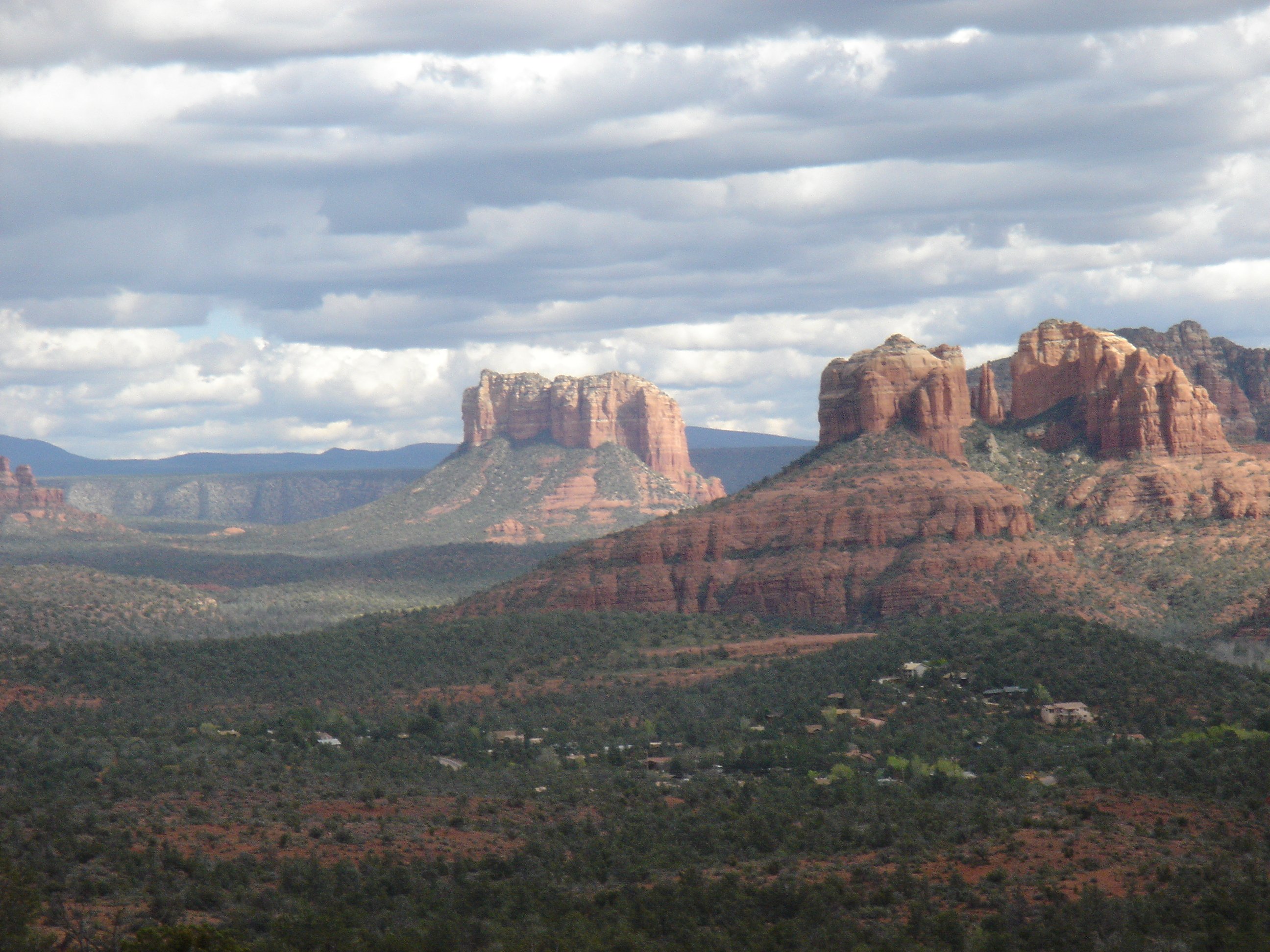
We spent a day in Sedona. It is a two-hour drive from Phoenix. It has a population of 10,000. Sedona is comfortably situated between the huge rocks of Red Rock State Park and the rich vegetation of Oak Creek Canyon.

Sedona’s beautiful rugged red rocks and canyons are very popular with the tourists and as a back drop for many Hollywood western movies.

There are many different ways to go through the red rock canyons, deserts and forests of Sedona. One can take an aerial tour by plane, helicopter or hot air balloon. One can hike or take a tour by bus, jeep or hummer. We chose to go by hummer. It was a ruggedly fun day.

Grand Canyon is 375 to 445 Km away from Phoenix – depending on which route you take. If one plans to drive then it is a good idea to stay overnight at one of the hotels at the Canyon. Since we had planned to do the trip in one day we decided to take a Grand Canyon aerial tour with a ground tour.

We flew in a nine-seat Cessna. It is a small plane and on a windy day it can be little rough. Those who have fear of flying or get air sick should take a tranquilizer and a pill to prevent nausea and vomiting about an hour before the flight.

The plane flies low so we can get a good view of Sedona’s red rocks, the San Francisco Peaks (Arizona’s highest point), then we see the Painted Desert and Navajo Indian Reservation which leads us to approach the Grand Canyon where we take an aerial view of the eastern part of the Canyon.

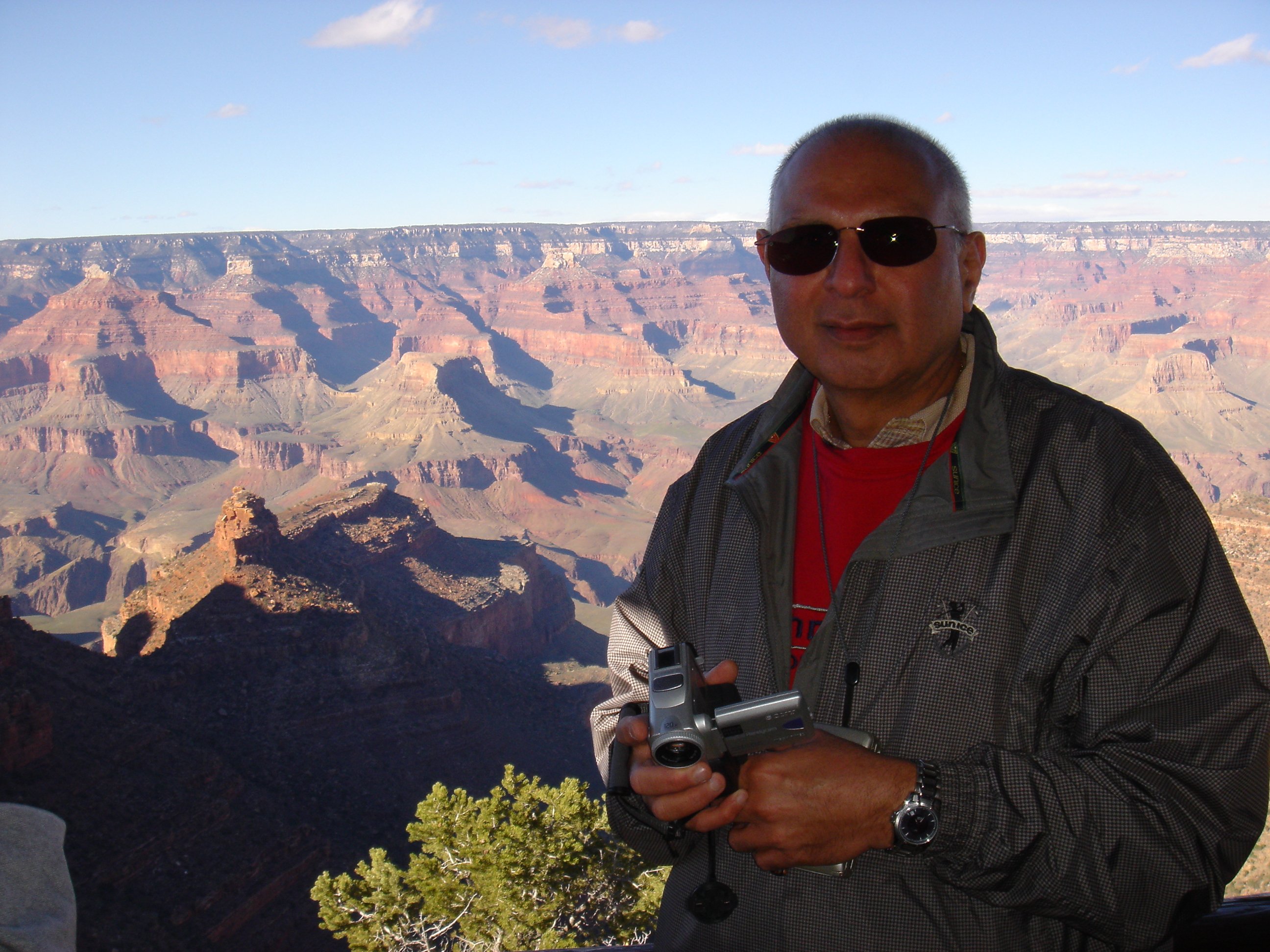
The flight time is one hour and fifteen minutes. We landed at the Grand Canyon airport. We were picked up by a bus and went on a tour. This was a three hour guided tour of the south rim of the Grand Canyon National Park. We stopped at the south rim overlook and took lots of pictures.

The visual impact of the Canyon is hard to describe. At this time of the year, the temperature at the Canyon is -4 C low to high of 10 C. So you have to take appropriate clothing with you. Flight back to Phoenix was smooth and took only 45 minutes as the plane flew high and the wind was behind us.

After a day of golfing in Scottsdale we were ready to fly back home and deal with the reality of life… until the next holiday!

Start reading the preview of my book A Doctor's Journey for free on Amazon. Available on Kindle for $2.99!