Proctalgia Fugax Is A Pain In The Butt

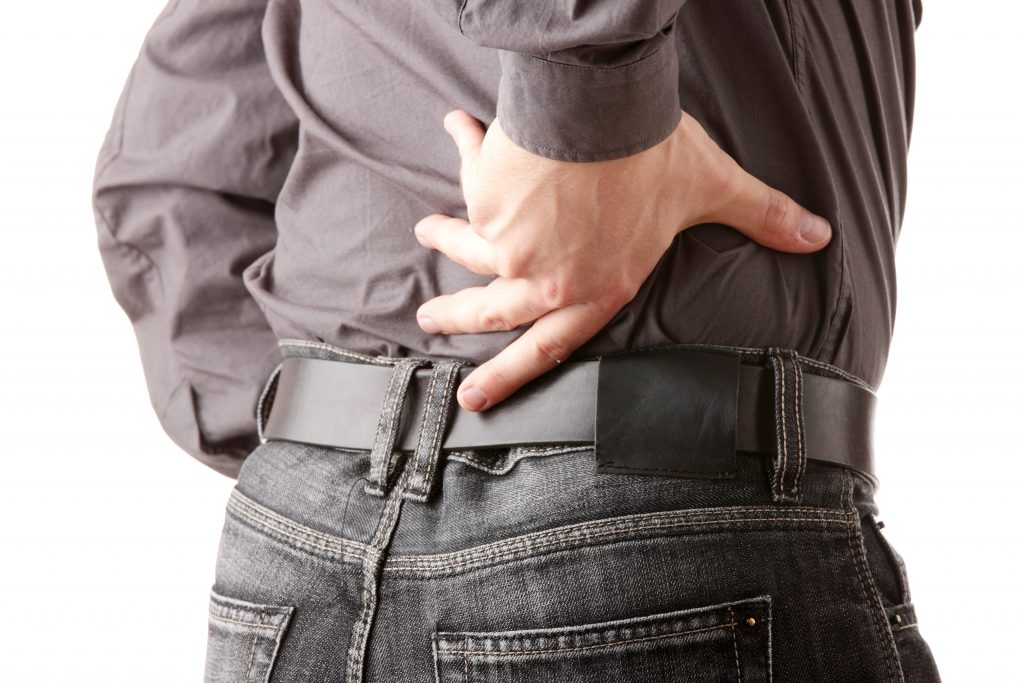
A man with pain shooting up his back. (Zoonar/Thinkstock)

You have pain in the butt which comes and goes. You see a doctor. You want to know if you have hemorrhoids or cancer. Well, what else could it be?

There are at least six common causes for rectal and anal pain: pruritus (itch), external thrombosed hemorrhoid (a blood clot), prolapsed internal thrombosed hemorrhoids, fissure (tear), abscess, and fistula (tunnel). Ok, you can add one more condition to the list – proctalgia fugax.

Your next question is, “Doc, what is proctalgia fugax?”

This condition was first described in Ancient Rome over 2000 years ago and still carries the Latin name which translates to “fleeting rectal pain.” It occurs in about 14 percent of healthy people. Seventy five percent of these are women.

Sufferers of this condition often describe waking up from a sound sleep with a sharp pain, often described as stabbing pain “like a knife sticking deep in the rectum.” The pain is usually brief – lasting less than 20 minutes – and disappears as mysteriously as it comes.
Proctalgia fugax falls under the category of “unexplained rectal and anal pain”. Other conditions under this group are levator ani syndrome and coccygodinia.

Let us try and understand some anatomy first.

Colon ends in the pelvis to become sigmoid, rectum and anus. Sigmoid and rectum act as storage area for fecal matter. At a socially convenient place, the anal sphincters (valves) relax to allow us to defecate.

Anal canal is surrounded by two circular muscles known as internal and external sphincters. Rectum is surrounded by and held in place by pelvic floor consisting of a group of muscles called levator ani. Coccyx is the tail end of the spine, not too far from the anal canal.

Proctalgia fugax can begin during sleep, defecation, urination, or intercourse. The character of the pain has been compared to a charlie horse. It may only occur once a year or several times a week. Pain may be severe enough to cause sweating and palpitation. There may be a desire to have a bowel movement, yet pass no stool.

It is thought that a sudden spasm of the levator muscle complex or the sigmoid colon can result in proctalgia fugax. It is believed that people who frequent the toilet are at greatest risk. Professionals, managers, and perfectionists are more likely to be afflicted. Stress and anxiety plays a role in precipitating the pain.

The diagnosis is based almost entirely on the patient’s history. Clinical examination is usually negative. Patients should undergo flexible sigmoidoscopy to screen for other causes of ano-rectal diseases. Careful pelvic and prostate examinations should be undertaken. Ultrasound or CT scan of the pelvis may be necessary.

Patients with levator ani syndrome experience pain for hours to days. The pain is most often constant or rhythmic and may be likened to sitting on a ball or feeling like a ball (or corncob) was inside the rectum. Pain may be caused by defecation, sexual intercourse, sitting for long periods, and stress or anxiety. The pain is probably due to spasm of the pelvic floor muscles.

Coccygodynia is a cramp or ache in the tailbone and typically results from injury to the coccyx or arthritis. Movement of the coccyx can reproduce the pain. Pain from proctalgia fugax, levator syndrome, and coccygodynia may be hard to differentiate.

Treatment is often unrewarding. Some of the measures worth trying are: reassurance, hot baths, bowel regimens, massage therapy, perineal strengthening exercises, pain killers, anti-inflammatory, muscle relaxants, topical nitrates, tranquillizers, calcium channel blockers, acupuncture, and psychiatric evaluation.

Unfortunately, proctalgia fugax is one of the many medical conditions for which there is no good explanation or treatment.

This article was mentioned in my video blog (Had Your Butt Checked Out Lately?) on September 25, 2011.

Topics on my website: Proctalgia fugax and Hemorrhoids.

Start reading the preview of my book A Doctor's Journey for free on Amazon. Available on Kindle for $2.99!

All-Terrain Vehicles Are Dangerous

Last week, I read two articles on all-terrain vehicles (ATVs). One was in the Bulletin of the American College of Surgeons (November 2008 issue) and the second article was in Westworld magazine (November 2008 issue). Then I went to the Canada Safety Council website (www.safety-council.org) to see what they had to say.

ATVs first appeared in Canada in the 1970s. They are used in the farming, forestry, natural resource and law enforcement industries. They are also popular for adventure tourism, recreational trail riding and camping. More than 2.5 million Canadians now ride ATVs and at least 850,000 own one.

According to the U.S. Consumer Product Safety Commission (CPSC), the number of estimated injuries treated in the emergency room has almost tripled over the most recent 10-year period – from 53,000 to 150,000. There is a threefold increase in the deaths – from 267 to 870. Twenty per cent of these deaths were amongst children younger that 16 years of age.

CPSC says that ATVs are one of the deadliest products under their jurisdiction. Most of the fatalities are due to rider error. With increased exposure has come a rise in injuries — most of them preventable. Speed, inexperience, improper apparel, non-use of helmets and alcohol are common factors. ATV injuries are more likely to happen to boys aged 15 to 19 than any other group. A US study found that only four per cent of the drivers involved in injury incidents reported having had any training, says the Canada Safety Council website.

The provinces with the largest increases in ATV-related injuries were New Brunswick (90 per cent) and Alberta (89 per cent).

The Alberta Centre for Injury Control and Research examined the 20 ATV-related deaths that occurred in the province between July 1999 and June 2002. Among its findings:
-The majority (55 per cent) occurred in the summer, between July and September.
-Eighty-five per cent of the deceased were the drivers of the ATV.
-At least 60 per cent of the fatalities were due to head injuries.
-Children and teens represented 45 per cent of those killed, including two passengers and seven drivers. The deceased drivers were all from 10 to 15 years old.
-Alcohol was involved in 45 per cent of the deaths.

Across Canada, regulations vary. The New Brunswick task force has made the following recommendation:

That youth between the ages of 14 and 16 years be required to obtain an all-terrain vehicle learner’s permit, for which they must have parental permission. The learner’s permit should only be obtained under the following conditions:
-must successfully complete a mandatory Canada Safety Council approved training course;
-must be supervised at all times by a parent or legal guardian who has successfully completed a Canada Safety Council approved training course and has a valid driver’s licence; and
-the size of the all-terrain vehicle being operated cannot exceed the size recommended for their age by the manufacturer.

What are the valuable precautions one can take when riding ATV?

Keep the vehicle off paved roads, avoid tandem rides, wear a helmet, do not drive under the influence of alcohol, and do not allow children to operate adult-sized ATVs. It is also suggested by the American Association of Pediatrics that no children younger than 16 years drive ATVs regardless of the model and whether an automobile driver’s license is required to operate one. The Canada Safety Council offers a hands-on training program led by certified instructors. It may be worth looking into that.

Start reading the preview of my book A Doctor's Journey for free on Amazon. Available on Kindle for $2.99!

One Egg A Day Is Good For Healthy People

It is not uncommon for people to wonder whether eating eggs is healthy. If it is healthy then how many eggs one should eat in a week.

This confusion is quite understandable. Eggs have developed a reputation of being high on cholesterol. But we do not know to what extent dietary cholesterol raises blood cholesterol level. Many scientists believe that saturated fats and trans fats have a greater role than does dietary cholesterol in raising blood cholesterol level.

The American Heart Association has said that as long as you limit dietary cholesterol from other sources, it may be possible to include a daily egg in a healthy diet.

Here is what the Mayo Clinic website says: One large egg has about 213 milligrams (mg) of cholesterol — all of which is found in the yolk. If you are healthy, it’s recommended that you limit your dietary cholesterol intake to less than 300 mg a day. If you have cardiovascular disease, diabetes or high LDL (or “bad”) cholesterol, you should limit your dietary cholesterol intake to less than 200 mg a day. Therefore, if you eat an egg on a given day, it’s important to limit or avoid other sources of cholesterol for the rest of that day.

If you like eggs but don’t want the extra cholesterol, use egg whites. Egg whites contain no cholesterol. You may also use cholesterol-free egg substitutes, which are made with egg whites. If you want to reduce cholesterol in a recipe that calls for eggs, use two egg whites or 1/4 cup cholesterol-free egg substitute in place of one whole egg.

I have been eating eggs all my life. These days I prefer to eat egg white. Occasionally, I do eat a whole egg and sometimes I eat eggs fortified with omega-3 fatty acids.

Does it matter how we cook our egg?

My enquiries and research tells me that different methods of cooking eggs do not make a difference in nutrient content. But we should remember that composition of a prepared food is the combination of all the ingredients used and the method used to prepare the food.

For example, fried egg will have higher fat content due to presence of oil. A typical scrambled egg may have some dairy product which will contribute its own nutrients and calories to the preparation. Same principle applies when preparing an omelet.

A cooked egg also loses water so the nutrients are more concentrated. Protein in the cooked egg is more digestible than an uncooked egg because cooking slightly denatures the protein.

There are no known benefits of eating raw eggs. In fact eating raw eggs is considered unsafe because of the risk of salmonella infection. Though the odds are pretty low – in US it is estimated to be 0.045 per cent and only one egg in 20,000 eggs is estimated to contain salmonella. Salmonella does not grow well at cold temperatures; therefore, refrigeration is very important. Properly cooked eggs destroys salmonella.

For safety reasons eggs should be cooked until the white and yolk are solid. We should be careful with recipes that require raw shell eggs or partly cooked eggs but do not require any heating to reach a temperature which will harden the egg white and the egg yolk.

Egg is considered to be a complete food. It is low in calories (79 calories) and is loaded with protein, important vitamins and minerals. Egg is low in fat but the yolk is high in cholesterol. Yolk is also high in calories (egg white 16 calories vs. yolk 63 calories per egg).

An egg a day is now considered safe for those people who have no cardiac or cholesterol problems. But egg white is healthier and safer to eat as it is low in calories with no fat or cholesterol. Egg white cartons can be easily purchased from Canadian supermarkets.

Click here for newer articles about cholesterol.

Start reading the preview of my book A Doctor's Journey for free on Amazon. Available on Kindle for $2.99!

Erectile Dysfunction May Be An Early Sign Of Heart Disease

Erectile dysfunction (impotence) may be an early sign of heart disease.

Greek researchers evaluated the incidence of asymptomatic coronary artery disease in 26 men with erectile dysfunction and found 23 per cent had coronary artery disease confirmed by angiography (x-rays of the coronary vessels).

Italian researchers studied 162 patients and found the prevalence of erectile dysfunction was high (66 per cent) among those with chronic angina and multivessel disease and low (18 per cent) among those who had had an acute myocardial infarction with only one vessel affected.

Patients with erectile dysfunction, with no obvious cardiac problems, are at a risk of a heart attack within two to three years. In these kinds of patients, erectile dysfunction is considered to be a warning sign of heart attack to come. For this reason, it is being suggested that patients with erectile dysfunction, with no obvious cardiac symptoms, should be evaluated for cardiovascular disease.

There are several reasons why patients with heart disease will have erectile dysfunction. Atherosclerosis (clogging and hardening of the blood vessels) narrows the blood vessels and reduces blood flow to your heart, brain, extremities and the penis. Reduced blood supply to the penis causes erectile dysfunction.

Certain medications taken for heart disease can cause erectile dysfunction (high blood pressure pills and diuretics). It is also important to remember medications taken for impotence may not be safe when combined with certain heart medications (for example nitrates). There is a connection between depression, heart disease and erectile dysfunction. Feeling anxious can also lead to erectile dysfunction. Fear of having a heart attack while having sex can lead to impotence.

Usually, this is an unfounded fear. After a heart attack, you can resume your sexual activity as soon as your doctor says ok. Sexual intercourse seldom causes heart attacks. Having sex with your usual partner in a familiar setting doesn’t lead to a particularly high blood pressure level or heart rate. Even if you’re at high risk of having a heart attack, weekly sexual activity only slightly raises the risk. In fact, regular sexual activity leads to a happy and satisfactory relationship and is good for your heart.

There are a number of risk factors that can contribute to both heart disease and erectile dysfunction. These factors are well known: diabetes, obesity, high cholesterol level, smoking and high blood pressure fall into this category. So, erectile dysfunction may have multifactorial cause and will require investigations and long term planning to get the situation under control.

Let us go back to the real life scenario – you have erectile dysfunction but have no other obvious health problem. What should you do?

First, you have to look at your personal scenario. Is your relationship with your partner stressful or unpleasant? Are you living or working in an environment which is depressing? Such factors will affect your performance in bed.

Your next step is to talk to your doctor. After evaluating your history and physical examination, your doctor will decide on what kind of investigations to undertake. Your doctor may decide to refer you to a urologist, a cardiologist or to a psychiatrist.

So, don’t be shy. If you are having problems maintaining an erection during sexual intercourse then see your doctor. It may save your life and your sex life.

Start reading the preview of my book A Doctor's Journey for free on Amazon. Available on Kindle for $2.99!