How much do you know about sleep?

Couple in bedroom. (iStockphoto)

This is a summary of an article written by Dr. Till Roenneberg, a professor of chronobiology and medical psychology at the Ludwig-Maximilians University in Munich, and published in the Washington Post on November 21 2012 titled, “Five myths about sleep.” Roenneberg is the author of “Internal Time: Chronotypes, Social Jet Lag, and Why You’re So Tired.”

Roenneberg says, “We spend between a quarter and a third of our lives asleep, but that doesn’t make us experts on how much is too much, how little is too little, or how many hours of rest the kids need to be sharp in school.”

First myth Roenneberg would like to debunk is – you need eight hours of sleep per night. He quotes Napoleon, who said, “Six hours for a man, seven for a woman and eight for a fool.” But this is not correct either. The truth is the ideal amount of sleep is different for everyone and depends on many factors, including age and genetic makeup.

Roenneberg’s research team has surveyed sleep behavior in more than 150,000 people. About 11 percent slept six hours or less, while only 27 percent clocked eight hours or more. The majority fell in between. Women tended to sleep longer than men, but only by 14 minutes.

When comparing various age groups – ten-year-olds needed about nine hours of sleep, while adults older than 30, including senior citizens, averaged about seven hours. Roenneberg’s team identified the first gene associated with sleep duration – if you have one variant of this gene, you need more sleep than if you have another.
Roenneberg says that we generally cannot oversleep. When we wake up unprompted, feeling refreshed, we have slept enough. In our industrial society we sleep about two hours less per night than 50 years ago and this significantly decreases our work performance and compromises our health and memory.

Second myth – early to bed and early to rise makes a man healthy, wealthy and wise. There was some truth in this when most of the work was done outdoors in natural light. The timing of sleep – earlier or later – is controlled by our internal clocks, which determine our optimal “sleep window.” With the widespread use of electric light, our body clocks have shifted later while the workday has essentially remained the same, says Roenneberg. This leaves us chronically sleep deprived.
Studies show that teenagers who sleep later and start school later exhibit improved academic performance, higher motivation, decreased absenteeism and better eating habits.

Third myth – exercise helps you sleep. Exercising may contribute to falling asleep earlier, and it certainly helps us sleep soundly through the night, says Roenneberg. But it’s exposure to light, not physical activity, that synchronizes our body clocks with daylight. Sleep is not only regulated by the body clock, but also by how long we were awake (also known as the buildup of “sleep pressure”).

Fourth myth – sleep is just a matter of discipline. Parents who think that putting their children early to bed will make it easier for them to wake up early in the morning will be disappointed. Roenneberg says early-to-bed teenagers will still have a hard time getting up at the crack of dawn. They go to school at their biological equivalent of midnight with profound consequences for learning and memory. Teenagers should sleep with daylight coming into their bedrooms and should refrain from using light-emitting devices after 10 p.m.

Fifth myth – most couples have very different sleep habits. Roenneberg says this is a matter of biology and genetics, not habits and personal preference. Women generally fall asleep earlier than men. Women, however, tend to control the sleep times in a partnership. Given how much time we spend in our beds, men and women don’t seem to give any consideration to sleep patterns when choosing a mate, concludes Roenneberg.

Start reading the preview of my book A Doctor's Journey for free on Amazon. Available on Kindle for $2.99!
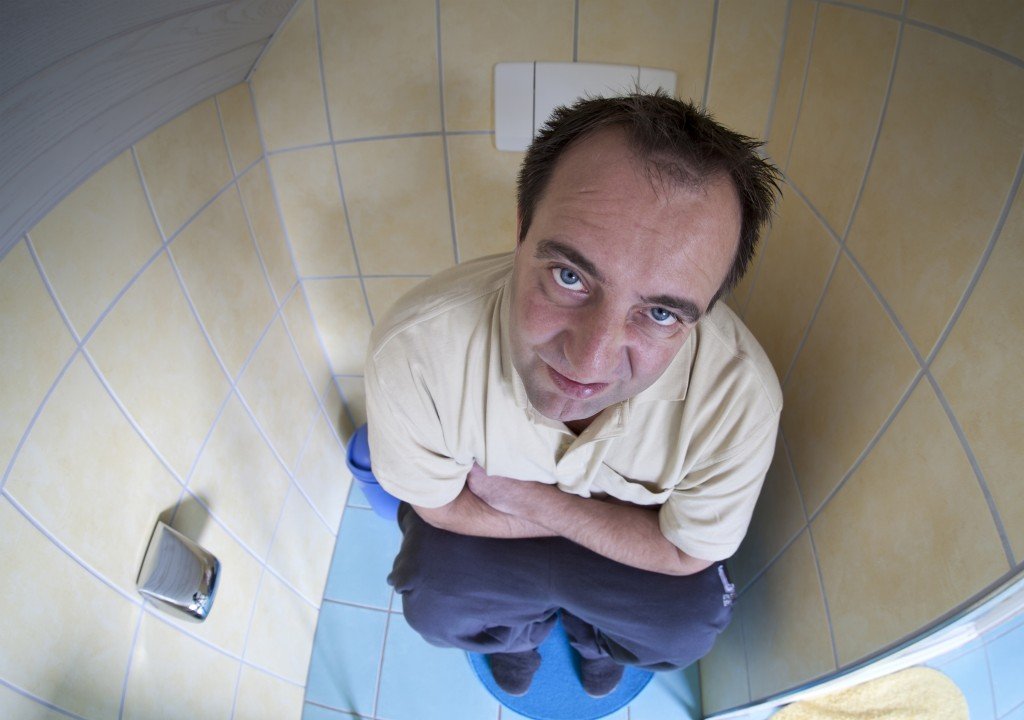
Five Things You Should Know About Proctalgia Fugax (Pain in the Butt)

After a sleepless night. (iStockphoto)

Proctalgia fugax was first described in Ancient Rome over 2000 years ago and still carries the Latin name which translates to “fleeting rectal pain.” I wrote about this some years ago. If you go to my website (nbharwani.com) and search proctalgia fugax, you will find that this is the most discussed article – more than 100 people have shared their experience with this condition.

Because of my interest in this, my attention was drawn to an article in the Canadian Medical Association Journal (CMAJ March 19 2013) titled “Five things you should know about proctalgia fugax.”

First thing you should know is proctalgia fugax has many triggers. There are episodes of sharp fleeting pain that recur over weeks, are localized to the anus or lower rectum, and last from seconds to several minutes with no pain between episodes. The authors of the article say that there are numerous precipitants including sexual activity, stress, constipation, defecation and menstruation, although the condition can occur without a trigger.

Second thing you should know is proctalgia fugax is common. In the general population, the prevalence of the condition may be as high as eight to 18 per cent. Seventy five per cent are women. It usually affects patients between 30 and 60 years of age.

Third thing you should know is that anal sphincter spasm may cause the pain in proctalgia fugax. The authors say that although the cause of proctalgia fugax is unclear, spasm of the anal sphincter is commonly implicated. It may occur after sclerotherapy for hemorrhoids and vaginal hysterectomy. Stress, anxiety and irritable bowel syndrome may be associated with proctalgia fugax.

Fourth thing you should know is proctalgia fugax is a diagnosis of exclusion. That means there is no test to tell if the person is suffering from this condition. We have to exclude common painful conditions of anus and rectum before we can say a person is suffering from proctalgia fugax. These conditions are: hemorrhoids, cryptitis, ischemia, abscess, fissure, rectocele and cancer.

Finally, the fifth thing you should know about this condition is that the treatments are geared towards relaxing the anal sphincter spasm. These treatments are: oral diltiazem, topical glyceryl nitrate (gives you headache), nerve blocks and salbutamol act by relaxing the anal sphincter spasm. But these treatments are not very effective.

Persistent symptoms require thorough investigations of anal and rectal areas and if no pathology is found then reassurance to patient is very important. There is no known effective treatment for this condition. There are anecdotal reports of benefit from trying any of the following treatments:
-Reassurance and warm baths
-Topical glyceryl trinitrate 0.1 per cent or diltiazem two per cent whenever required
-Salbutamol inhalation 200µg regular three times a day or whenever required
-Warm water enema at the time of symptoms
-Clonidine 150µg twice a day
-Local anesthetic block or botulinum toxin injection
-Help to relieve anxiety and stress

Start reading the preview of my book A Doctor's Journey for free on Amazon. Available on Kindle for $2.99!

Oops! What did your surgeon forget in your body?

Nurse handing instrument to surgeon. (Jupiterimages)

OK, don’t worry. It is not that common. In an article published in the Journal of the American College of Surgeons (January 2013) titled, “Retained Surgical Items: A Problem Yet to Be Solved,” by Stanislaw P.A. Stawicki, MD, and others says retained surgical items (RSI) continue to occur. But the exact numbers are difficult to document due to the low frequency of RSI in a single institution and due to the medicolegal implications.

Literature suggests retained surgical items have traditionally been estimated to occur at a rate of 0.3 to 1.0 per 1,000 abdominal operations, and approximately 1 in 8,000 to 18,000 of all inpatient operations.

Seven teaching institutions were invited to participate in this retrospective, multicenter, case-control study of RSI risk factors was conducted between January 2003 and December 2009. Fifty-nine RSIs and 118 matched controls were analyzed (RSI incidence 1 in 6,975 or 59 in 411,526). Retained surgical items occurred despite use of confirmatory x-rays (13 of 27 instances) and/or radiofrequency tagging (2 of 32 instances).

The researchers concluded:
-higher body mass index

-unexpected intraoperative events
-longer procedure duration and
-occurrence of any safety omissions like an incorrect count were associated with increased RSI risk.

Trainee presence was associated with 70 per cent lower RSI risk compared with trainee absence. The researchers are not sure why this would be the case. This requires further study. They further say, “Our findings highlight the need for zero tolerance for safety omissions, continued study and development of novel approaches to RSI reduction, and establishing anonymous RSI reporting systems to better track both the incidence and risks associated with this problem, which has yet to be solved.”

As one can expect, the operating room is a complex environment where technology, team dynamics, potent pharmaceuticals, and technically difficult operations create high potential for adverse events.

The researchers highlight at least three major obstacles to reducing the incidence of RSI, including locating missing items identified by an incorrect count, reducing the rate of incorrectly-correct counts, and improving team attentiveness and compliance with safety procedures and documentation.

If you are having surgery in the near future then remember, the incidence of retained surgical items is extremely small. The people who work in the operating rooms are highly trained and dedicated and your safety, I am sure, is their first concern.

Start reading the preview of my book A Doctor's Journey for free on Amazon. Available on Kindle for $2.99!

Circumcision: The Controversy Continues

Mother and son. (iStockphoto)

“What advice should a physician give to parents considering whether or not to have their baby circumcised?” asks Dr. Jeff Blackmer. Dr. Blackmer is a Director of Ethics at the Canadian Medical Association (CMA). His column appears in the Bulletin of the CMA which is part of the Canadian Medical Association Journal (CMAJ February 5, 2013).

The Canadian Paediatric Society (CPS) evaluates scientific evidence and sets guidelines in matters affecting children’s health. Since 1996, CPS has advised physicians that circumcision of newborn should not be routinely performed as there was no medical benefit. This, of course, has not changed the practice. Some parents request circumcision for their sons for religious reasons or family tradition.

In August, 2012 the American Academy of Pediatrics (AAP) updated its 1999 policy on circumcision to say that there are some medical benefits to having the procedure. Circumcision lowers risk of urinary tract infection, cancer of the penis, and sexually transmitted infection. Blackmer says that CPS is reviewing the evidence and may release an updated statement.

In 2011, Dr. Noni MacDonald, Section Editor of CMAJ wrote an article in the CMAJ under the title, “Male circumcision: get the timing right.” (CMAJ April 19, 2011). Dr. Noni MacDonald is a Professor of Paediatrics and of Computer Science at Dalhousie University with a clinical appointment in Paediatric Infectious Diseases at the IWK Health Centre in Halifax Canada. She is the former Dean of Medicine at Dalhousie University.

“The most commonly performed surgical procedure in the world – male circumcision – is done for therapeutic, prophylactic, religious, cultural and social reasons. Discussions of male infant circumcision for health reasons are always split,” says MacDonald in her article.

Those who support circumcision say that there are significant potential health benefits including a decreased risk for some sexually transmitted infections, a decrease in HPV-related penile cancer and reduced phimosis and paraphimosis (tightness of the foreskin).

Those who oppose circumcision say that the procedure is not without likely complications – about 1.5 per cent – and it is a painful procedure for the newborn.
Medical organizations in western countries have discouraged infant circumcision for many years. MacDonald asks, “The question now is whether the findings from the randomized trials of adult male circumcision in sub-Saharan Africa that show circumcision halves the risk of acquiring HIV and decreases risk for HSV-2 (a herpes simplex virus that can cause genital herpes) and high-risk HPV in heterosexual African adult men push these organizations to change their positions on routine infant circumcision.”

MacDonald adds, “… none of the sub-Saharan African studies examined infant circumcision; all involved adult male circumcision. There is no new evidence that infant circumcision provides any added benefit to the neonate, infant or young child with respect to HIV and HPV protection. The potential benefit from circumcision only begins to accrue when the male becomes sexually active.”

The dilemma is: if the infant is not going to benefit from circumcision until he is sexually active then should we offer circumcision during peripubertal time? Would the male adolescent be willing to go through the procedure? Currently, infants have no choice. The choice for them is made by their parents.

The World Health Organization agrees there is evidence that male circumcision significantly reduces the risk of HIV acquisition by men during penile-vaginal sex, but also state that circumcision only provides partial protection and should not replace other interventions to prevent transmission of HIV.

Well, what is the conclusion? I will quote Dr. Blackmer from his ethics corner column mentioned earlier. It says, “Some parents will always choose circumcision, some will always reject it, and some will decide based solely on the evidence.” The only thing a physician can do is present the evidence and let the parents make the decision.

Start reading the preview of my book A Doctor's Journey for free on Amazon. Available on Kindle for $2.99!