Prostate Cancer Tests


Dear Dr. B: Can you please tell me about the new test under development for early detection of prostate cancer?

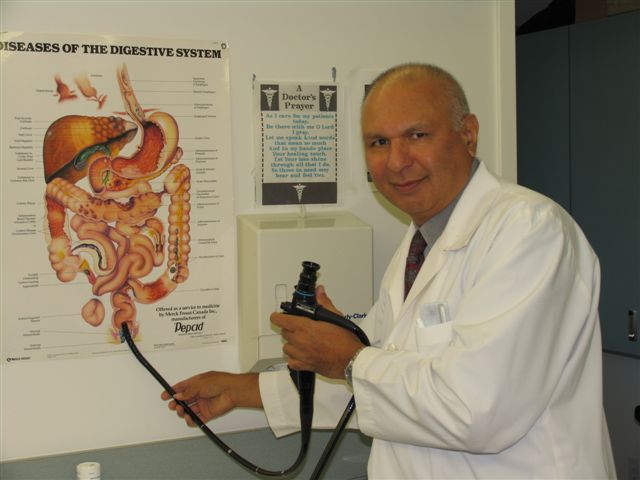
Answer: I received this question from a friend whose style of writing and sense of humour I enjoy. The e-mail contained a comment on my last column on aspirin and colon cancer and the photograph accompanying the article showing a flexible sigmoidoscope. Here in part is what my friend said:

‘Imaginative photo. We amateurs still squirm about such “personal” things and, I’m sure, men more than women, are real wimps about poking around the body. Of course, to a medical person it is a smart surgical instrument used in an everyday procedure. To a patient it is perceived as a fire hose up the whazoo… Just the other day I was discussing, in a casual conversation, the old finger-vs.-PSA test… Today, through bleary eyes, I read a piece in the Globe about new research and new tests under development. I know you’ve hit this before. But it might be worth a visit to this subject again some time.’

My friend is right. It is time to revisit the subject because prostate cancer is the most frequent cancer and the second leading cause of death from cancer in men, exceeded only by lung cancer. In our region, 80 to 90 new cases of prostate cancers are diagnosed each year. And each year 10 to 15 patients die of the disease.

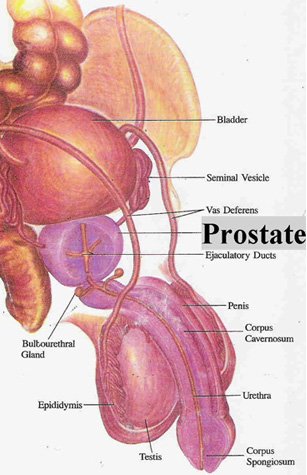
The walnut size prostate gland lies below the urinary bladder in front of the lowest inch of the rectum, through which it can readily be felt on digital rectal examination. The gland has an important role in the proper flow of urine. It also provides the proteins and ions that form the bulk of the semen. In conjunction with other smaller glands in the vicinity, the prostate gland produces secretions that serve to lubricate the reproductive system and provide a vehicle for storage and passage of sperms.

Once upon a time, “the old finger” i.e. digital rectal examination (DRE) was the only crude way to pick up early prostate cancer. Although DRE has a cancer detection rate of only 0.8 to 7.2 percent, it remains an important test that can be done easily in a doctor’s office. It also checks for anal and rectal tumours.

Then came the PSA blood test. PSA was expected to replace the embarrassing and uncomfortable DRE. And it was promoted as an ideal test for screening and early detection of prostate cancer. But this hope has not materialized.

Now a group of researchers from the University of Michigan Medical School are working on a test which would use the body’s own immune system to detect prostate cancer early. That makes sense as the immune system, in response to cancer, releases thousands of chemicals into the bloodstream to destroy the tumor.

The new blood test looks for 22 of these chemicals that specifically fight prostate cancer. The preliminary report indicates that these chemicals are more reliable than PSA in detecting prostate cancer. But the bad news is that it will be several years before this test is perfected and marketed for everyday use.

In the meantime, we have to rely on “the old finger” and PSA test. Findings from a new national research study released recently by the Prostate Cancer Research Foundation of Canada (PCRF) found very few Canadian men are willing to discuss prostate cancer and PSA test with their family doctors. PCRF has launched a campaign with a slogan “Don’t Get Scared. Get Tested.” More information can be found on PCRF website, www.prostatecancer.ca.

Start reading the preview of my book A Doctor's Journey for free on Amazon. Available on Kindle for $2.99!
Asprin and Colon Cancer

Dear Dr. B: Does aspirin prevent colon and rectal cancer?

Answer: In the past there have been numerous reports supporting the protective effect of aspirin and other non-steroidal anti-inflammatory drugs (NSAIDs) on the development of cancer.

But a recent study from the Harvard Medical School, published in the Journal of the American Medical Association (JAMA), concluded that low doses of aspirin (100 mg) taken over a long period of time (10 years) do not help prevent colon cancer. In fact, the researchers found that low-dose use of aspirin had no effect on total cancer, breast cancer, colorectal cancer or cancers at any other sites, with the exception of lung cancer. Again, the findings on lung cancer were not conclusive.

In another study, the researchers found high doses of aspirin (14 tablets of 325 mg. aspirin in a week) taken over 10 years can prevent colorectal cancer by 53 per cent. This study involved 80,000 women. If you take six to 14 aspirins a week you reduce your risk by 22 per cent.

This information is important for individuals who are at a high risk for development of colon cancer because of personal or family history. But there is a risk involved when aspirin is consumed. For every one or two women who were protected from cancer, eight developed serious bleed from the stomach and intestine.

Aspirin is not the magic pill for prevention of colorectal cancer. But there are other things one can do to prevent colorectal cancer. Limit consumption of red meat and processed meat. Maintain normal body weight. Have a regular rectal examination after the age of 40. Have your stool checked for occult blood. Report any alarm symptoms to your doctor because you may be a candidate for further investigations involving barium enema and flexible sigmoidoscopy or colonoscopy.

These investigations are also used for screening. All screening tests have advantages and disadvantages and none of the screening tests have 100 per cent accuracy rate. Screening for colorectal cancer is important and should be encouraged among healthy asymptomatic Canadians who are 50 years of age or over. But the ideal method of screening remains controversial.

There is no controversy when it comes to patients who have alarm symptoms. The alarm symptoms are: rectal bleeding, change in bowel habit, anemia, change in the caliber of your stool, loss of weight and abdominal mass. These complaints should be investigated early as colorectal cancer is the second most common cancer among Canadians and affects men and women equally.

Something to think about!

Peter Mansbridge, Chief Correspondent of CBC Television News and Anchor of The National writes in his Macleans column, “The war on terror now enters its fifth year, making it as long as the First World War, almost as long as the Second, and longer than the Korean war.” He goes on to say that as in all wars, most of the dead are young, some very young.

“Each week there seems to be at least one 18-year-old listed. That means that on September 11, 2001, those youngsters were barely in their teens – just 13 or 14. Barely into high school… Now they are dead soldiers.”

Start reading the preview of my book A Doctor's Journey for free on Amazon. Available on Kindle for $2.99!
Prevention – West Nile Virus and Melanoma

If you are addicted to reading, listening and watching news then you probably feel your health and your very existence is being threatened by nature. Then in the comfort of your living room you wonder if Albertans have anything to worry about, besides the rising cost of buying gas.

Well, West Nile virus (WNV) is something to worry about. The medical officer of health, the Health Promotion Marketing Coordinator of the Palliser Health Region and the media do a good job of keeping the public informed on the subject of West Nile virus. So far I believe our region has had four cases of confirmed WNV and Alberta has had about six.

This is a small number compared to what we had in 2002 and 2003 when the first cases of infection in humans in Canada were documented. At that time 1300 confirmed cases of WNV where reported in seven provinces. In 2004, only 26 cases were reported and this year probably it will be less than that.

In 2003, Alberta experienced an epidemic of WNV when 275 human cases were reported. Nearly half the human cases (131) occurred in the Palliser Health Region, according to the statistics provided by Gordon Wright, the Health Promotion Marketing Coordinator for Palliser Health Region.

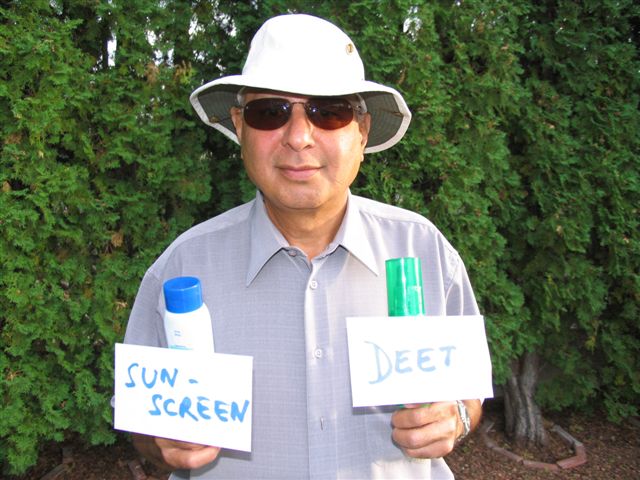
Credit should also be given to local municipal authorities who must be doing a good job applying larvicides to control the population of mosquito vectors. And the people are more aware of the dangers of exposing to mosquito bites. Many of them take preventive measures by using mosquito repellent, avoiding peak biting times and wearing protective clothing such as long sleeved shirts, trousers and socks. We should also avoid handling dead birds and animals that may be infected.

It is nice to read that we are doing better each year. But this is not the time to lower our guard. The WNV activity typically increases in late summer and early fall. The activity is also influenced by weather conditions and the number of birds and mosquitoes in the region.

An article in a recent Canadian Medical Association Journal warns that mosquito repellent should be used with caution in children under the age of 12. They should not be exposed to DEET concentration of more than 10 per cent and DEET should not be used on infants less than six months old.

There is no vaccine against WNV infection and there is no definitive treatment. So we have to rely on prevention.

When you are outdoors worrying about the mosquitoes you should also remember prevention is the key word when it comes to melanoma. Did you know that malignant melanoma rates have tripled in Alberta over the last 30 years? This is mainly due to our desire to tan. There are three types of skin cancers and melanoma is the worst kind. Prevention with early detection and treatment are the best way to control this problem.

Melanoma affects males and females equally. The most common site for males is trunk and for females it is hip and lower limb area. Although skin cancers occur more in sun exposed areas, it is still possible to have skin cancer on any part of the body.

Prevention of melanoma is best achieved by use of sun screen, avoiding sun exposure between 10 a.m. and 3 p.m. and wearing wide-brimmed hat. Surgical removal of suspicious looking moles also helps in the prevention of skin cancer.

So when you go outdoors, it is better to apply sunscreen first before applying DEET. Looks like we are going to have good weather for sometime to come. So enjoy but take care.

Start reading the preview of my book A Doctor's Journey for free on Amazon. Available on Kindle for $2.99!

Holiday in Portugal and Spain


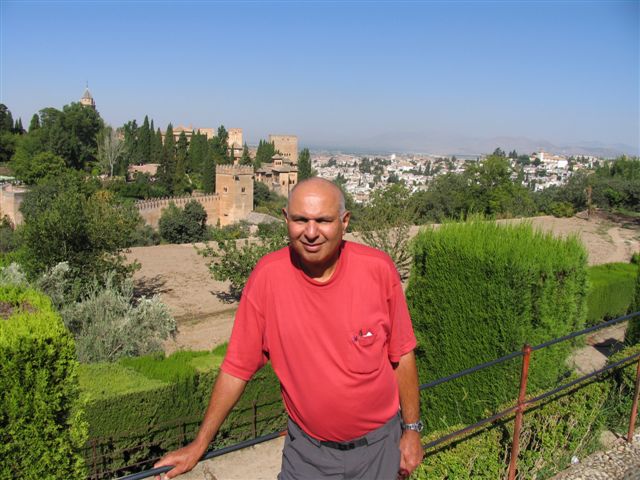
Dr. Noorali Bharwani poses in front of the world-famous Alhambra on the left and city of Granada, Spain on the right. Granada was a long-time capital of Moorish Andalusia. Alhambra is one of the most important Arabian palaces with lush gardens.

Every now and then go away,
Have little relaxation,
For when you come back to your work
Your judgment will be surer……
-Leonardo da Vinci (1452-1519)

From time to time I listen to Leonardo da Vinci and pack my bags and leave town to reflect on the past, the present and plan for the future.

For more than one reason, 2005 is an important year for me. Many of my personal wishes and dreams are coming closer to fulfillment. I feel this year I have reached an important milestone in my life. So it was time to take a long break and think where I need to be in the next 10 years.

So I packed my bags and treated myself and my family to four weeks of holiday. We spent three weeks in Toronto, Portugal (Lisbon, Algarve), and Spain (Seville, Granada, Cordoba and Madrid). Before that I took five days off and did some continuing medical education and golfing in Canmore and Banff.

The holiday was wonderful. In Toronto, we attended Musoma Reunion. Musoma is in Tanzania where I was born and went to school until Grade nine. Since there was no high school in Musoma, I went to a boarding school in Dar-es-salaam. Then I moved on to India, England and Canada. So I had not seen most of my friends for many years. I hate to say how many! But it was an eye opener to see how passage of time has aged people – including me! I still remember many of my friends in their school uniforms!

In Portugal and Spain we found the people to be nice and friendly. The history of these countries is very fascinating. From 1000 BC to AD 1179 Portugal was under occupation, from Romans to Moors.

Then came the Age of Discovery and Portugal became a powerful empire. Portuguese ships rounded the Cape of Good Hope in 1488, and in 1497 Vasco da Gama reached Calicut, India. By 1560, Portugal had claimed Brazil and many other countries.

Spanish history is very similar. First came the Romans, then Moors and then the Christians. A Moor is a Muslim Arab who lives in northwest Africa. Moors invaded Portugal and Spain in the 8th century and established a civilization in Andalusia that lasted until the late 15th century.

Muslims built mosques where the Roman temples were. Christians built churches where the mosques were. For hundreds of years Jews, Muslims and Christians lived in harmony until they started fighting to control the land. Islam brought to Europe mathematics, papermaking, oranges, spices and rice as well as unique Islamic architecture and planning which is visible even today.

Temperatures in summer are anywhere in high 30s to high 40s Celsius. Between 3 p.m. and 8 p.m. most businesses shut down for siesta. You have to organize your schedule for shopping, meals and tours accordingly. Bullfights are scheduled only on Sundays. People smoke everywhere.

Not all shops, restaurants and banking machines accept credit or Interac cards. So carry enough cash with you. All our flights were running late by an hour or more. This makes it difficult to catch connecting flights. Make sure you have about three hours lay over to be on the safe side. These days airlines do not give a damn about our comfort. The planes are packed like sardines and leg room between seats is minimal. Not to mention other discomforts in the planes.

But, you cannot walk to Portugal and Spain. So, we have to fly because these countries are worth a visit. Remember, every now and then go away…

Start reading the preview of my book A Doctor's Journey for free on Amazon. Available on Kindle for $2.99!