Vitamin B12 Deficiency

Dear Dr. B: Can you please tell me about vitamin B12 deficiency?

Answer: This is a very important subject. I have written about this in the past. And it is worth repeating as 30 per cent of the adults older than 50 may have vitamin B12 deficiency. It is estimated up to 40 per cent of the general population may be deficient in this vitamin.

Vitamin B12, also known as cobalamin, was first isolated in 1948 and was immediately shown to be effective in the treatment of pernicious anaemia. Pernicious anaemia is a fairly common condition in which the stomach does not have enough acid and does not make intrinsic factor normally. Intrinsic factor is essential for the absorption of B12 in the stomach.

Absorption of B12 is also impaired in individuals who have had intestinal illness or intestinal surgery, which makes it hard for the intestines to absorb vitamin B12. Absorption of vitamin B12 from foods is complex. A defect in any step can lead to deficiency.

B12 is obtained primarily from animal proteins (red meat, poultry, fish, eggs, and dairy). But the vegetarians can get enough of it from legumes. The cause of B12 deficiency is not usually poor diet but problems with absorption as explained earlier.

Our body needs vitamin B12 to make blood cells. Persons with the deficiency may have no symptoms or may have symptoms related to blood disorder or disorders of the nervous system including psychiatric problems. Fatigue may be one of the first indications of B12 deficiency.

The liver stores most of the body’s B12 followed by the kidneys, heart, spleen, and brain. The stored B12 can last up to two years in conditions where our body is deprived of B12.

The diagnoses of B12 deficiency is made by checking the blood levels in patients who have symptoms or who are prone to B12 deficiency. Screening for B12 deficiency (by way of a blood test) is recommended in the following groups of people:

-all elderly patients who are malnourished
-all patients in institutions and psychiatric hospitals
-all patients who have blood disorders, neurological or psychiatric problems.

Treatment is by B12 injections on regular basis for the rest of person’s life.

*********

The golf season has started. It’s time to have little fun here before we get miserable on the golf course. Here is a joke from Golf Digest:

A man is stranded for years on a desert island. One day he looks up to see a gorgeous blond in scuba gear wading out of the water.

“Want a cigarette?” she asks, opening a waterproof pocket on her right arm, pulling out a pack and lighting one for him.

“How about a sip of whiskey?” she asks next, opening a pocket on her left arm and removing a flask.

As the man puffs on the cigarette and sips the whiskey, she slowly begins to unzip the front of her wet suit.

“Want to play around?” she asks.

And he says, “Oh, Lord, don’t tell me you’ve got a set of golf clubs in there, too.”

Start reading the preview of my book A Doctor's Journey for free on Amazon. Available on Kindle for $2.99!
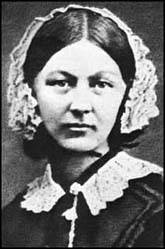

Nurses Week: Florence Nightingale

Florence Nightingale

Florence Nightingale (May 12, 1820 – August 13, 1910)

‘The very first requirement in a hospital is that it should do the sick no harm.’ -Florence Nightingale 1820-1910

National Nursing Week is being celebrated from May 8-14, 2006. The week is organized around Florence Nightingale’s birthday on May 12. This year’s theme for National Nursing Week is Nursing: Promoting Healthy Choices for Healthy Living.

Nursing was fully established as a profession in the nineteenth and twentieth centuries. But nursing is an old profession and in India, hundreds of years before Christ, a nurse’s qualifications were described as follows (Lyons and Petrucelli’s Medicine, An Illustrated History):

-Knowledge of the manner in which drugs should be prepared or compounded for administration
-Cleverness
-Devotion to the patient waited upon
-Purity of mind and body

A nurse can either be a man or a woman. Throughout history males have attended to the sick in hospitals. But women have been the principal performers of nursing duties in every period and every country.

Who was Florence Nightingale?

William Nightingale of Embly Park, Hampshire, U.K. was a wealthy landowner. His daughter Florence was born in Florence, Italy. Florence was taught by her father. She learnt many languages and studied history, philosophy and mathematics.

Florence’s mother, Fanny, wanted Florence married at an early age. But Florence refused to do that. At the age of 25, Florence decided to be a nurse. The profession of nursing was looked down upon during that time so her parents were not very happy with Florence’s decision.

At the age of 31, Florence went to Kaiserwerth, Germany to study nursing and two years later returned to England to be appointed as lady superintendent of a hospital in London.

In 1853, the Crimean War started when Russia invaded Turkey. Britain got involved and sent troops to Turkey to stop the spread of Russian influence in that area. Very soon the British troops were down with cholera and malaria. Florence Nightingale offered her services and took a group of 38 nurses to Turkey.

There was considerable prejudice against women medical personnel in general and especially in the army. Nightingale had difficult time being accepted but she fought hard to reform the army hospitals where there was lack of hygiene and elementary care.

In 1856, Nightingale returned to England. She was treated as a national heroine. She launched a campaign to improve the quality of nursing in military hospitals; she published books on nursing reforms and in 1860, found the Nightingale School & Home for Nurses at St. Thomas’s Hospital. She also campaigned for the emancipation of women. Nightingale was also acknowledged as a “prophetess” in the development of applied statistics.

Nurses have come a long way since the days of Florence Nightingale. Now some of the nurses will be working as nurse practitioners. A recent article in the Canadian Medical Association Journal says that all the provinces and two territories have passed legislature which allows nurse practitioners to work.

A nurse practitioner is a registered nurse with additional education in health assessment, diagnosis, treatment and management of illnesses and injuries. In 2004, there were 878 licensed nurse practitioners in Canada. And this number is increasing.

Nurses are part and parcel of our health care system and their role will continue to increase as they continue to take advantage of higher education and the gaps left by the shortage of physicians in rural areas. I have worked with nurses all my working life and have been on the receiving end of their kindness and care as a patient. I admire the hard work they do. Good luck and keep up the good work. Enjoy the National Nursing Week.

Start reading the preview of my book A Doctor's Journey for free on Amazon. Available on Kindle for $2.99!

Dear Dr. B: What is Sjogren’s syndrome?

Answer: Sjogren’s (pronounced “show-grins”) syndrome is a chronic autoimmune disorder in which body’s own antibodies (immune cells) attack and destroy the glands that produce tears and saliva. The syndrome was first described by Swedish ophthalmologist Henrik Sjögren (1899-1986). The syndrome is also associated with rheumatic disorders such as rheumatoid arthritis.

Why do our own immune cells turn against us? We don’t know. It may have some thing to do with our genes.

Patients with Sjogren’s syndrome present with dry mouth and dry eyes. The condition may also cause skin, nose and vaginal dryness. It may affect other organs of the body such as kidneys, blood vessels, lungs, liver, pancreas and brain.

The condition is more common between the ages of 40 and 60 but it may occur at any age. It is more common in females. About four million people in the U.S. are affected by Sjogren’s syndrome.

Because of the involvement of many organs, a patient may present with multiple symptoms. This makes diagnosis difficult. But there are several tests available to confirm the diagnosis of Sjogren’s syndrome.

Blood tests are done to check if a patient has high levels of antibodies. A strip of filter paper is used to check for production of tears. There is a test to check for dryness on the surface of the eyes A biopsy of the lip or salivary glands can be done to check for damaged cells.

Is there a cure for the problem? Unfortunately, no. There is neither a known cure for Sjögren’s syndrome nor a specific treatment to permanently restore gland secretion. Treatment is symptomatic and supportive such as artificial tears, goggles and increased local humidity to protect the eyes.

Medications are used to increase salivary flow. Steroids or immunosuppressive drugs are used for symptomatic relief of other symptoms. Prognosis for this condition is variable depending on the severity of the disease process.

********

What is the most important meal of the day?

Most people know that the most important meal of the day is breakfast. It is the first meal of the day after prolonged overnight fast. A good breakfast should provide us with enough calories and should be healthy. It should curb our hunger later in the day so the total amount of calories consumed is less.

Dr. Khursheed Jeejeebhoy, a highly respected gastroenterologist and professor of medicine at the University of Toronto reviewed some literature and wrote an article in the Medical Post on this subject. He concluded that on the basis these studies, a good way to avoid overeating is to eat a breakfast rich in protein and fiber on a regular basis with fish meals thrown in. Fish protein is better than beef protein in reducing daily energy intake. So make it a point to enjoy a healthy breakfast everyday.

Start reading the preview of my book A Doctor's Journey for free on Amazon. Available on Kindle for $2.99!

Chocolate

Here is a picture of me admiring chocolate at Rocky Mountain Chocolate Factory in the Medicine Hat mall. In the background is Jody Jesse, assistant manager.

There are two food groups: chocolate and fruit.
If it is fruit, it should be dipped in chocolate.
-from Chocolate Humour website

March was nutrition month. It has come and gone. Now what? Now it’s April and time for Easter eggs. Those yummy eggs full of nice tasting chocolate.

I like chocolate and once in a while I give in to dark chocolate. This happens more often when I am looking for instant energy. You may catch me eating chocolate on a ski hill, on a golf course or when I am travelling. But I do not look for a chocolate when I am busy at work.

Chocolate is made from roasted cacao beans. Hot chocolate drink has been around since Christopher Columbus and others brought cacao beans to Spain in 1521. In 1643, a Spanish princess took solid chocolate to France and chocolate became very popular all over Europe.

An average North American consumes about five to six kilograms of chocolate a year. Did you know 40 per cent of world’s almonds, 20 per cent of world’s peanuts and eight per cent of world’s sugar is used by chocolate manufacturers? No wonder too much chocolate is fattening.

There are three varieties of chocolates: dark, milk and white chocolate. Chocolate liquor is the main ingredient in dark and milk chocolate and white chocolate has no chocolate liquor.

Is chocolate good for us? Many studies have suggested moderate intake of chocolate (especially dark chocolate) is good for our heart and vascular system. This is surprising because chocolate contains about 30 per cent saturated fat. Saturated fat is known to raise bad cholesterol level. But chocolate has saturated fat which is poorly absorbed in the intestine. That is good news for chocolate lovers. Chocolate also improves blood flow and reduces blood pressure.

Besides being fattening, chocolate can cause dental caries. What about chocolate addiction, chocolate acne and chocolate migraine? There isn’t much scientific evidence to prove any of that. So once in awhile you can enjoy your chocolate.

Here are some trivia questions from the Internet:

-How do you get two kilograms of chocolate home from the store in a hot car? Answer: Eat it in the parking lot.

-If you eat equal amounts of dark chocolate and white chocolate, is that a balanced diet? Answer: I don’t know.

-Is it true that researchers have discovered chocolate produces some of the same reactions in the brain as marijuana? Answer: The researchers also discovered other similarities between the two, but can’t remember what they are…

Well, you will have to excuse me now, my heart needs a piece of dark heart shaped chocolate. Yummy…

Start reading the preview of my book A Doctor's Journey for free on Amazon. Available on Kindle for $2.99!