The Silent Killer – Hypertension on the Rise

“The number of adults with hypertension more than doubled from 1995 to 2005. The age- and sex-adjusted prevalence increased from 153.1 per 1000 adults in 1995 to 244.8 per 1000 in 2005, which was a relative increase of 60 per cent,” says an article in the Canadian Medical Association Journal (CMAJ).

The article was discussing public health strategies to prevent and manage hypertension and its consequences in Ontario, the most populous province in Canada. I think the problem of hypertension is no different in the rest of Canada and the U.S.

Articles in the CMAJ reported marked improvement in the diagnosis and treatment of high blood pressure. This may explain the increase in the prevalence of hypertension which may represent an increase in the detection of hypertension rather than a true increase in its incidence.

It is estimated that a middle-aged man with normal blood pressure has 90 per cent risk of becoming hypertensive. That is scary.

The consequences of high blood pressure are severe. Nearly two-thirds of all cases of stroke and one-half of all cases of coronary heart disease are directly related to hypertension. What is scarier is that most cases of hypertension either go undiagnosed or untreated. That is why it is called a silent killer. You may have high blood pressure but may not have any symptoms.

For example, in U.S., studies show that only 37 per cent of hypertensive patients were treated and adequate control of blood pressure achieved. Comparative studies from Europe indicate that less than 25 per cent of people with hypertension receive adequate treatment. In Canada, 1985–1992 Canadian Heart Health Survey reported a treatment and control rate of only 13 per cent.

One of the most important findings reported in one of the studies from Ontario is the remarkable improvement in hypertension management. The study reported hypertension awareness rate of 87 per cent, treatment rate of 82 per cent and treatment and control rate of 66 per cent. These numbers are by far the highest from any population-based study, says one of the CMAJ article.

The study also revealed that South Asian and female black Canadians had a disproportionately high prevalence of hypertension. This means intervention programs should be targeted to such groups at community and individual levels. They also found that one in three adults with hypertension did not have blood pressure control.

Diabetic patients with hypertension have a high risk for cardiovascular disease. Unfortunately, two-thirds of these patients did not have blood pressure control and that over one-quarter had received no treatment. If these patients receive intensive treatment for high blood pressure then this actually saves the health care system money as well as prevents death and disability, says one of the articles.

As they say, prevention is better than cure. You can reduce the risk of hypertension by 50 per cent by maintaining healthy weight and exercising daily. Eating a healthy diet with lots of fruits and vegetables also helps. Have your blood pressure checked when you visit your doctor. Common symptoms of hypertension to look out for include recurring headaches, dizziness, confusion, unexplainable nosebleeds, and vision problems.

Bare your arm for blood pressure measurement next time you visit your doctor.

Start reading the preview of my book A Doctor's Journey for free on Amazon. Available on Kindle for $2.99!
How Safe Do You Feel As a Patient?

How safe do you feel as a patient?

Some years ago, experts estimated that in U.S. up to 98,000 people die each year from medical errors that could have been avoided. Many others may have been less seriously injured. In Canada and other developed countries the figures are proportionally no different.

There is no doubt that health care professionals work hard to provide safe and high quality medical care. But errors occur and there are many reasons for that. We cannot cover them all here but we can discuss few in terms of how you, as a patient, can stay safe.

Your safety, first of all, depends on your identification. Make sure your name and current address is correctly spelled and written, your date of birth is correct and your health insurance plan number on the card is correctly copied.

If you Google your name on the Internet you will find there are many people in the world who bear the same name as yours. In our office we have several patients with identical names. We have to be very careful that we do not mix their reports or give them wrong treatment. We feel checking the name, address, date of birth and health care insurance card number is very important. In the hospital, make sure your wrist band has correct information.

One thing which bothers me a lot is how dates are written by various people, organizations, departments, hospitals and doctors’ offices. The way I like to write is month in alphabets followed by day and year in numerical (June 10/08). This creates no confusion. Can you imagine people writing the same date in various different ways: 6/10/08 or 10/6/08 or 08/10/6? I think it is ridiculous and dangerous that we allow so many different ways to write dates.

Medication errors are not uncommon. There are many medications which have similar sounding names. You should always carry in your purse or wallet a list of medications you take. When you visit a doctor (who is not your regular doctor) you should take all your medications with you. Each year, during your annual physical, take with you all your pills and review with your doctor the necessity of continuing to take them. Also make sure your allergies are recorded properly.

You run the risk of picking up infection in every health care setting. To minimize the risk take necessary precautions. Wash your hands before and after your visit to a health facility. Just like washing your hands before and after you eat. Shower and wear clean clothes before your visit. With snow and rain, we tend to carry lot of dirt on our shoes. Most health care facilities request patients to remove wet and dirty shoes before they go in the examination rooms. Some facilities provide shoe covers. There is no guaranteed way to prevent infection. But each person, including health care providers, has responsibility to minimize the risk of infection.

What about complications from surgical procedures and invasive investigations? All procedures carry risks. Risks vary from minor to major like death. Before going through a procedure, you should discuss with your health care provider your expectation of the outcome. In return, the health care provider will explain to you the procedure and its likely complications. Make sure the site of surgery is marked with indelible ink so you do not end up getting a wrong foot amputated or a wrong side hernia repaired or a healthy knee replaced. In your follow-up visit make sure you get the results of all your tests and procedures.

Finally, carry a copy of your health history. It should contain your personal and medical information as discussed earlier including your family history. Being safe is being healthy.

Start reading the preview of my book A Doctor's Journey for free on Amazon. Available on Kindle for $2.99!

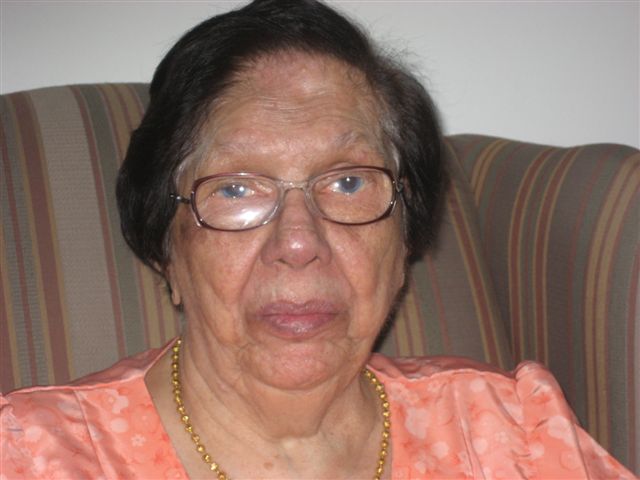
Lives Lived: Sikina Bharwani

Sikina Bharwani
Sikina Bharwani

Wife, mother, grandmother, great-grandmother, great-great-grandmother, matriarch. Born Dec. 1, 1920, in Jamjodhpur, Gujarat, India. Died April 19 in Calgary of metastatic gynecologic cancer, aged 87.

At the tender age of 15, Sikina married a handsome man named Hussein, who was 21. He had worked in Tanzania for eight years and had returned to India to look for a bride. He and Sikina married and lived in Tanzania for more than 35 years. They had eight children.

Sikina faced many challenges in her life. One of them was a motor vehicle collision in 1965. She was a passenger in a cab that was taking her to Masaka, Uganda, when the cab was hit head-on by a drunk driver. Sikina sustained multiple life-threatening injuries with many broken bones. She spent four months in a hospital in Kampala, Uganda. But she fought back and survived.

With Idi Amin’s brutal regime in Uganda terrorizing Asians, Hussein and Sikina decided to leave Tanzania. They moved to England and then to Canada, arriving in Calgary in 1975.

Five years later, Sikina was found to have a brain tumour close to a large blood vessel. Two neurosurgeons in Calgary felt surgery would be too risky. Hussein insisted on a third opinion. The third neurosurgeon, after considerable deliberations, elected to do the surgery. We were warned of the likely complications and the possibility of death. But Sikina was ready for it; she could not live the way she felt.

Sikina survived the six-hour surgery and had a full recovery. After many years of good health, in April, 2000, she momentarily lost speech and function on the right side of her body. A large tumour had recurred at the site of the previous excision.

Within a week, Sikina was back in the operating room undergoing another six hours of brain surgery. This time the recovery was slow. She was in the hospital for five weeks. But she did not give up. She was home again looking better and walking with a walker.
This time Hussein wasn’t there – he had passed away in 1991. But all her children and their families were around.

Sikina also had numerous friends. She was known to be always smiling and never complaining. Out of all things, her courage stands out. She had experienced three life-threatening events, moved through four continents and courageously faced many of life’s ups and downs and survived. She had a Grade 4 level education and spoke very little English, yet she managed to live alone for 17 years in a one-bedroom condo. She was one tough lady.

Sikina believed in God and miracles. She was the matriarch of the family, survived by five children, 18 grandchildren, 10 great-grandchildren and one great-great-grandchild. She is missed by all who knew her. Long live Sikina and her legacy of love, courage and optimism.

Noorali Bharwani is Sikina’s son.

Start reading the preview of my book A Doctor's Journey for free on Amazon. Available on Kindle for $2.99!

Colorectal Cancer Screening Program

Last week, every physician in Alberta received an envelope from Alberta Cancer Board containing Alberta’s first clinical practice guidelines for colorectal cancer screening. There isn’t much new in the protocol they advocate. This protocol has been used before and followed by many physicians in Alberta and around the world. What is new is that the protocol has now been formally accepted and promoted by various health organizations in Alberta.

Number one cancer killer in Alberta is lung cancer. What is the second leading cause of cancer death in Alberta? Of course, colon and rectal cancer. In 2004, 650 Albertans died of this disease. In Canada, 8,700 people died of colorectal cancer in 2007.

How many people over the age of 50 get screened for colorectal cancer each year? Less than 15 per cent. That is not good. Alberta Cancer Board hopes that this number will improve in the next few years.

Asymptomatic men and women who are 50 years or older, with no family history of colorectal cancer, are considered to have average risk for colorectal cancer and one of the following options is available for screening:
-Stool tests, also known as fecal occult blood tests (FOBT), yearly or bi-annually or
-Flexible sigmoidoscopy (60 cm. scope) every five years – checks rectum and left side of the colon. This is an office procedure. It picks up 50 to 70 per cent of advanced polyps and cancer or
-Combine fecal occult blood tests with flexible sigmoidoscopy every five years or
-Barium enema every five years (not used very often for screening) or
-Colonoscopy every 10 years

It is quite reasonable to choose any one of the above methods. This is better than no screening. Each method has advantages and disadvantages which your doctor will discuss with you.

It is of interest to note that Alberta Medical Association’s TOP (Toward Optimized Practice) program has launched Health Screen in Act10n (meaning 10 screening maneuvers) program to enhance screening practices among Alberta doctors.

The TOP pamphlet says that the campaign asks physicians to use a checklist of health markers when seeing patients for periodic health examinations to make sure that they have covered areas of importance which would improve the quality of their practice and enhance patient’s health in preventing disease.

Ten markers or maneuvers were selected were on the basis of best practice evidence available from various sources. These are: patient’s smoking behavior, blood pressure, tetanus/diphtheria vaccination status, PAP test, clinical breast examination, fasting glucose, lipids, mammography, colorectal cancer screening and bone density.

It would not be a bad idea for you to make a list of these markers and see where you stand. Even better would be to take the list with you when you see your doctor next time and see how you are doing. Human memory can be short or deceptive when it comes to remembering dates. Your doctor should be able to help you update your checklist.

It is not easy to stay healthy. It requires time, perseverance and sacrifice. Good luck.

Start reading the preview of my book A Doctor's Journey for free on Amazon. Available on Kindle for $2.99!